Carbon Fiber vs. Alternatives: Cost & Value Calculator
Enter Your Details
Estimated Part Costs
Market AverageValue Analysis
Weight Savings:
Curb Weight Reduction:
Risk Factor: Repair Costs
If you damage the part, here is the estimated repair/replacement impact:
- PU/Fiberglass: DIY repair possible (~$50-$100)
- Carbon Fiber: Professional shop required () or full replacement.
Enter your details to see if Carbon Fiber makes sense for your build.
You’ve seen the shine. You’ve felt the lightness. Carbon fiber is the gold standard for automotive enthusiasts who want their cars to look aggressive and perform faster. But here’s the thing nobody tells you when you’re staring at that $800 rear wing in an online shop: it isn’t magic. It’s a composite material with serious flaws. If you treat carbon fiber like steel or aluminum, you will break it. And if you think it’s just about looking cool, you might be paying a premium for a headache.
So, what are the actual problems with carbon fiber? It’s not just the price tag. It’s about how the material behaves under stress, how it reacts to your environment, and why fixing a cracked panel can cost more than buying a new one. Let’s strip away the hype and look at the reality of owning carbon fiber parts, especially spoilers and body kits.
The Price Tag That Never Makes Sense
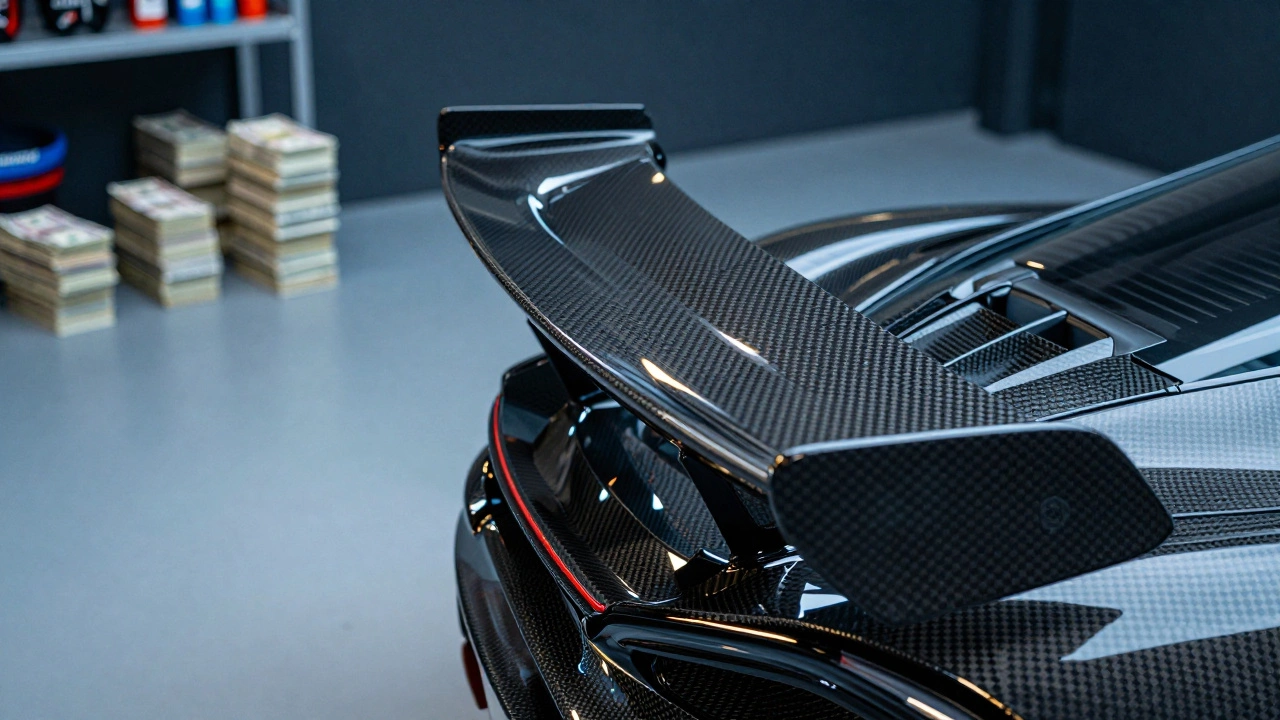
Let’s start with the obvious. Carbon fiber is expensive. Not "buy a nice dinner" expensive. We’re talking "sell a kidney" expensive. A polyurethane (PU) bumper cover might cost you $150. The same part in dry carbon fiber? You’re looking at $1,200 to $2,000. Why? Because the manufacturing process is brutal on materials and labor.
Carbon fiber isn’t extruded like plastic or stamped like metal. Each piece is hand-laid. Technicians place individual sheets of woven carbon cloth into a mold, soak them in resin, and then bake them under heat and pressure. This takes time. It takes skill. And it creates waste. If a layer is misaligned by a millimeter, the whole part is trash. That labor cost gets passed directly to you.
But here’s the kicker: for most street cars, you don’t need that weight savings. A carbon fiber hood saves maybe 30-40 pounds compared to steel. On a 3,500-pound sedan, that’s a 1% reduction in curb weight. Will you notice it in daily traffic? No. Are you paying 500% more for a 1% gain? Yes. Unless you are racing on track where every pound shaves milliseconds off lap times, the cost-to-benefit ratio is terrible for the average driver.
Brittleness and Impact Damage
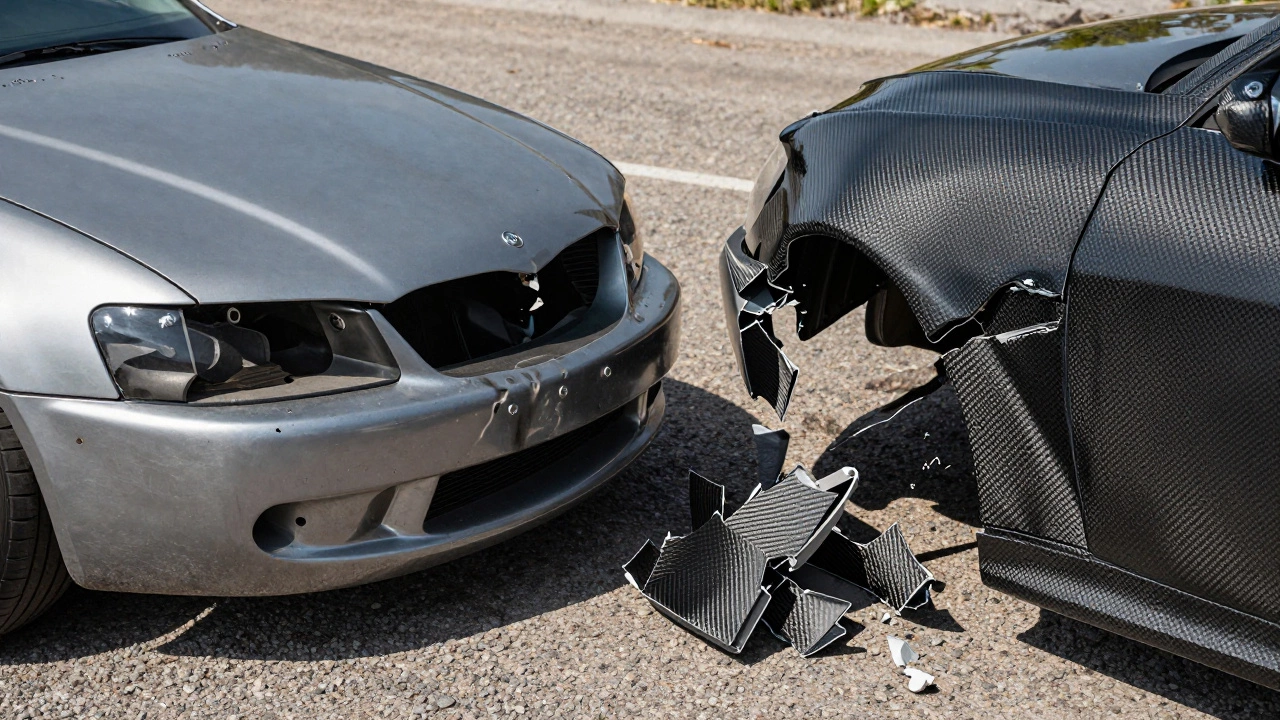
Steel bends. Aluminum dents. Carbon fiber snaps. This is the biggest misconception about the material. People hear "stronger than steel" and assume it’s indestructible. Strength and toughness are two different things. Carbon fiber has incredible tensile strength-it won’t stretch or tear easily. But it has low impact resistance.
Imagine dropping a glass plate versus a plastic tray. The plastic deforms; the glass shatters. Carbon fiber is closer to the glass. When a stone chips your front splitter, or you hit a pothole with your side skirts, the material doesn’t absorb the energy by denting. It fractures. These cracks often start small but propagate quickly through the weave.
This is particularly dangerous with spoilers. A rear wing generates downforce. If the mounting struts crack due to vibration or a minor impact, the wing can detach at highway speeds. I’ve seen too many owners ignore hairline cracks because they didn’t affect the "look." Then, they’re doing 70 mph, and the wing flies off, taking their taillights with it. Carbon fiber fatigue is real. Unlike metal, which shows visible deformation before failing, carbon can fail suddenly without warning.
The Delamination Nightmare
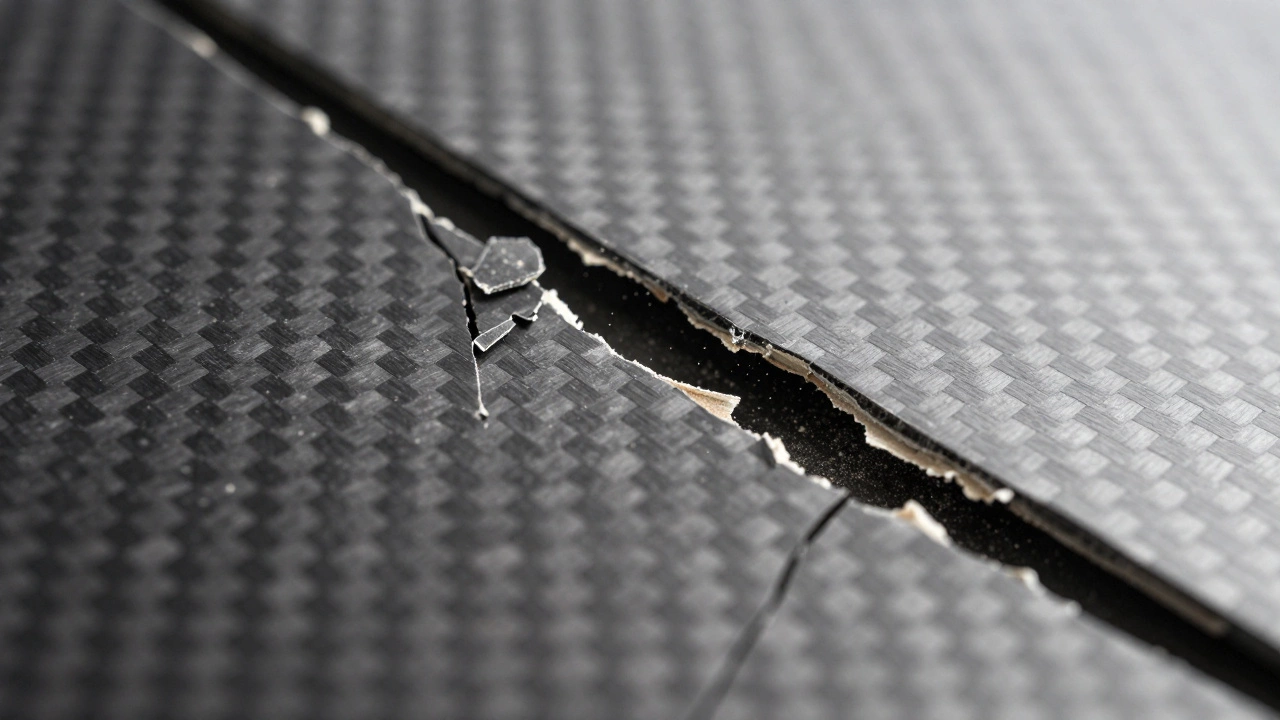
Have you ever heard a hollow sound when you tap on a carbon fiber panel? That’s delamination. It happens when the layers of carbon cloth separate from each other. This usually occurs due to poor manufacturing quality control or exposure to extreme temperature changes.
In cheap, wet-woven carbon fiber parts (the kind sold as budget upgrades), the resin doesn’t bond perfectly with every layer of fabric. Over time, moisture and heat work their way into those microscopic gaps. The structural integrity drops significantly. A delaminated spoiler looks fine from ten feet away, but it’s essentially a stack of loose papers glued together weakly. It offers zero aerodynamic benefit and could snap off in a strong wind gust.
Dry carbon fiber, used in high-end applications, minimizes this risk because the resin infusion is controlled precisely. But even dry carbon isn’t immune. If you install a carbon fiber trunk lid and the mounting points aren’t reinforced properly, the stress concentration can cause the layers to peel apart around the hinges. Once delamination starts, it spreads. You can’t just glue it back together. The part is compromised.
UV Degradation and Finish Failure
Carbon fiber itself doesn’t care about the sun. The epoxy resin holding it together does. Most carbon fiber parts come with a clear coat to give them that glossy, checkerboard look. But clear coats fade. They yellow. They peel.
If you live in Arizona or Florida, your carbon fiber spoiler will suffer. UV rays break down the chemical bonds in the resin over time. Within three to five years, that shiny black surface turns matte and hazy. Worse, the clear coat can blister and flake off, exposing the raw resin underneath. Raw resin looks ugly-like dirty amber plastic-and it attracts dirt instantly.
Restoring the finish is a pain. You can’t just spray paint over it like you would with ABS plastic. You have to sand down the entire surface, re-prime, and re-clear coat. If you miss a spot, the old clear coat lifts up, creating bubbles. Many owners end up wrapping their carbon fiber parts in vinyl just to protect the finish, which defeats the purpose of showing off the weave pattern in the first place.
Repair Is Nearly Impossible for Amateurs
Here is the scenario: You park your car, and someone backs into your carbon fiber rear diffuser. A small corner is chipped. With a fiberglass bumper, you’d mix some resin, lay a patch, sand it down, and paint it. Done in an afternoon for $50.
With carbon fiber, good luck. Repairing carbon requires matching the exact weave orientation of the original layers. If the original part had fibers running vertically for strength, your horizontal patch won’t hold up. You need access to a vacuum bagging setup to ensure the repair cures without air pockets. You need specific hardeners and resins that match the original manufacturer’s specs.
Most body shops don’t know how to fix carbon fiber properly. They’ll try to use fiberglass filler, which adds weight and ruins the aesthetic. Or they’ll send it out to a specialist, where a simple chip repair can cost $300-$500. For larger cracks, the recommendation is almost always: replace the part. And remember, replacing that spoiler costs $1,500. So, that little rock chip just became a major financial event.
Electrical Conductivity and Interference
This is a niche problem, but it bites people who install aftermarket electronics. Carbon fiber is electrically conductive. If you mount a carbon fiber antenna mast or a carbon fiber dash pod near your radio or GPS sensors, you can get signal interference. The material acts like a Faraday cage, blocking or distorting electromagnetic waves.
I’ve worked on builds where owners installed carbon fiber steering wheels and complained about their keyless entry fobs not working. The carbon in the wheel was disrupting the low-frequency signal between the key and the car’s receiver. It’s rare, but it’s a physics fact. If you’re heavy on tech mods, keep carbon fiber away from sensitive antennas and receivers.
| Feature | Carbon Fiber | Fiberglass | Polyurethane (PU) |
|---|---|---|---|
| Cost | Very High ($$$) | Low ($) | Medium ($$) |
| Impact Resistance | Poor (Brittle) | Moderate | Excellent (Flexible) |
| Weight | Lightest | Heavy | Medium-Light |
| Repair Difficulty | Very Hard | Easy | Easy |
| UV Stability | Requires Clear Coat | Good | Good |
When Should You Actually Buy Carbon Fiber?
So, should you avoid it entirely? No. Carbon fiber has its place. If you are building a track car, every pound matters. In that context, the brittleness is acceptable because you control the environment (no shopping cart dings, no parking lot abuse). If you have unlimited budget and want the best visual statement possible, go for it. Just accept that it’s a luxury item, not a practical upgrade.
For the rest of us driving daily commuters, consider alternatives. Polyurethane (PU) bumpers and spoilers are flexible, durable, and cheap. Fiberglass is stiff enough for static panels like hoods but easier to repair than carbon. Sometimes, the best upgrade is the one that survives a wash cycle and a gravel road without cracking.
Is carbon fiber worth the money for a street car?
Generally, no. For street driving, the weight savings are negligible, and the risk of impact damage is high. You are paying a massive premium for aesthetics rather than performance. Save your money for tires or brakes, which actually improve handling.
Can I repair a cracked carbon fiber spoiler myself?
Only for very minor cosmetic chips. Structural cracks require professional repair with vacuum bagging and precise layer alignment. DIY repairs often lead to delamination and further failure. It’s safer and cheaper in the long run to replace severely damaged parts.
Why does my carbon fiber look dull after a year?
UV degradation is likely causing the clear coat to oxidize. Wash the part with a dedicated carbon fiber cleaner and apply a UV-resistant sealant. Avoid abrasive polishes, as they can remove the thin clear coat layer, exposing the resin underneath.
What is the difference between dry and wet carbon fiber?
Dry carbon uses pre-impregnated fibers with less resin, resulting in a lighter, stronger, and more consistent part. Wet carbon involves laying dry cloth into a mold and pouring resin over it, which can lead to excess weight, air bubbles, and a thicker, glossier finish that hides imperfections. Dry carbon is superior but much more expensive.
Does carbon fiber interfere with car electronics?
Yes, because carbon fiber is electrically conductive. It can block radio signals or interfere with keyless entry systems if placed too close to antennas or receivers. Keep carbon fiber components away from sensitive electronic zones during installation.