LED Headlight Compatibility & Risk Checker
Vehicle Configuration
Select your vehicle details and click Analyze Compatibility to see your risk assessment.
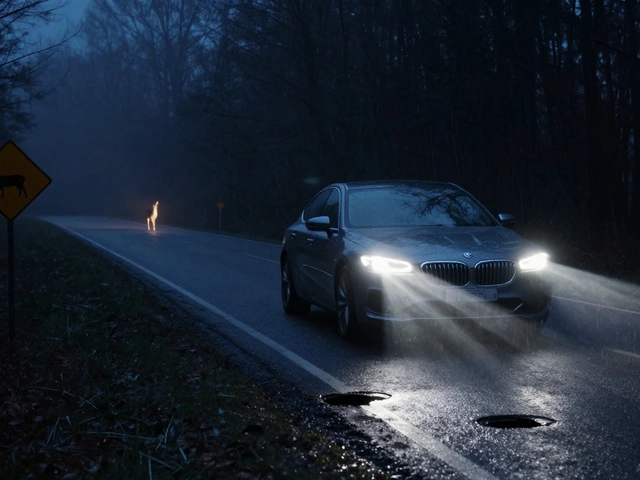
It is a tempting upgrade. You want the crisp, white light of LEDs, but you do not want to spend hundreds on new projector housings or halogen reflectors. So, you grab a cheap pair of LED headlight bulbs solid-state lighting modules designed to replace traditional filament bulbs in vehicle headlamps and drop them into your existing setup. The result? Often, it is a disaster. Your beam pattern scatters like confetti, blinding oncoming traffic while leaving dark spots on the road right in front of your car.
The short answer is yes, you physically can put them in. But should you? That depends entirely on how your headlight housing was designed. If you skip this step, you might be trading better visibility for a ticket from a state trooper or, worse, causing an accident because your lights are actually performing worse than the stock halogens.
Why Your Old Housing Might Hate LEDs
To understand why swapping bulbs is tricky, you have to look at how light works inside a headlight assembly. Traditional Halogen bulbs incandescent lamps with a tungsten filament filled with halogen gas, emitting light from a small focal point emit light from a tiny filament. This filament sits at a precise mathematical focal point within the reflector bowl. The curved surface of the reflector bounces that light forward in a controlled pattern, creating a sharp cutoff line that keeps light out of other drivers' eyes.
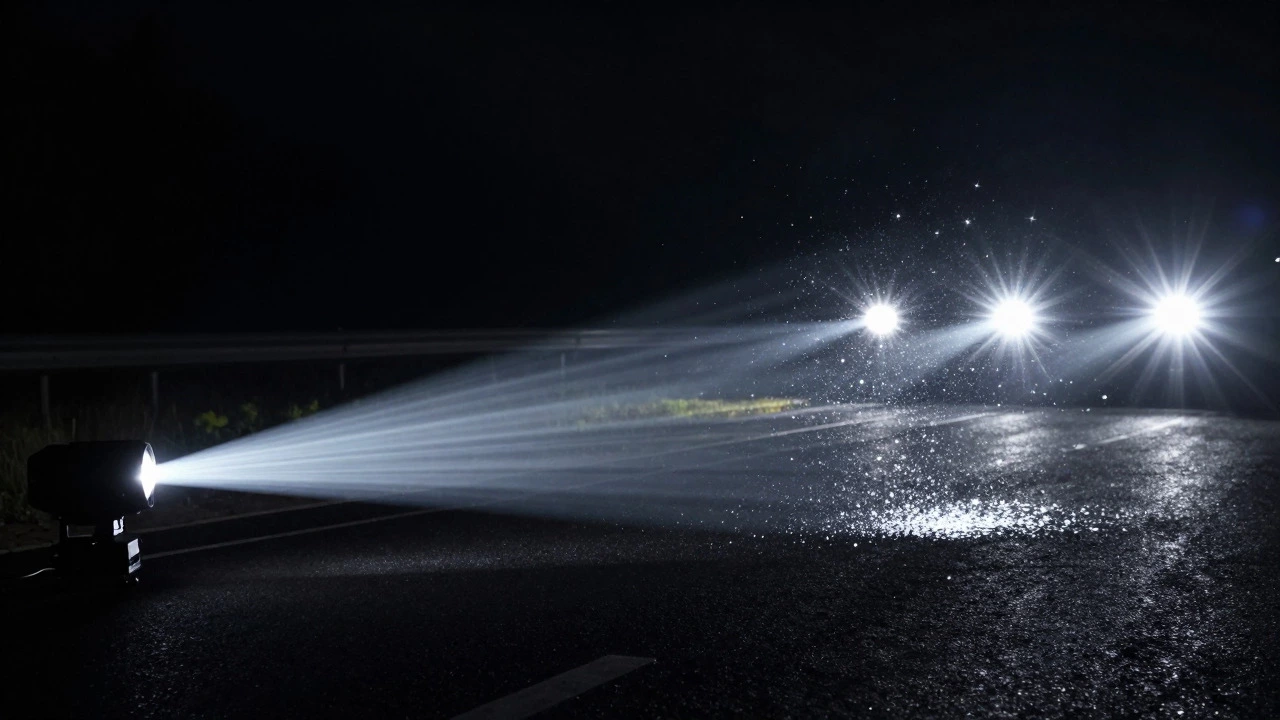
LEDs work differently. They use multiple diodes arranged on a circuit board. These diodes are often larger and positioned differently than a thin wire filament. When you install an LED bulb in a housing designed for a halogen, the light source moves away from that critical focal point. The reflector cannot focus the light properly. Instead of a tight beam, you get a scattered glow. This phenomenon is known as "hotspotting" or glare.
If your car has Reflector headlight housings headlamp assemblies that use parabolic mirrors to direct light, common in vehicles manufactured before 2010, which are standard on most cars made before 2010, this issue is severe. Projector lenses, found on newer or luxury vehicles, handle LEDs much better because they use a lens system rather than just reflection. However, even projectors have specific requirements for bulb size and heat management.
The Heat Trap: Why Cooling Matters More Than Brightness
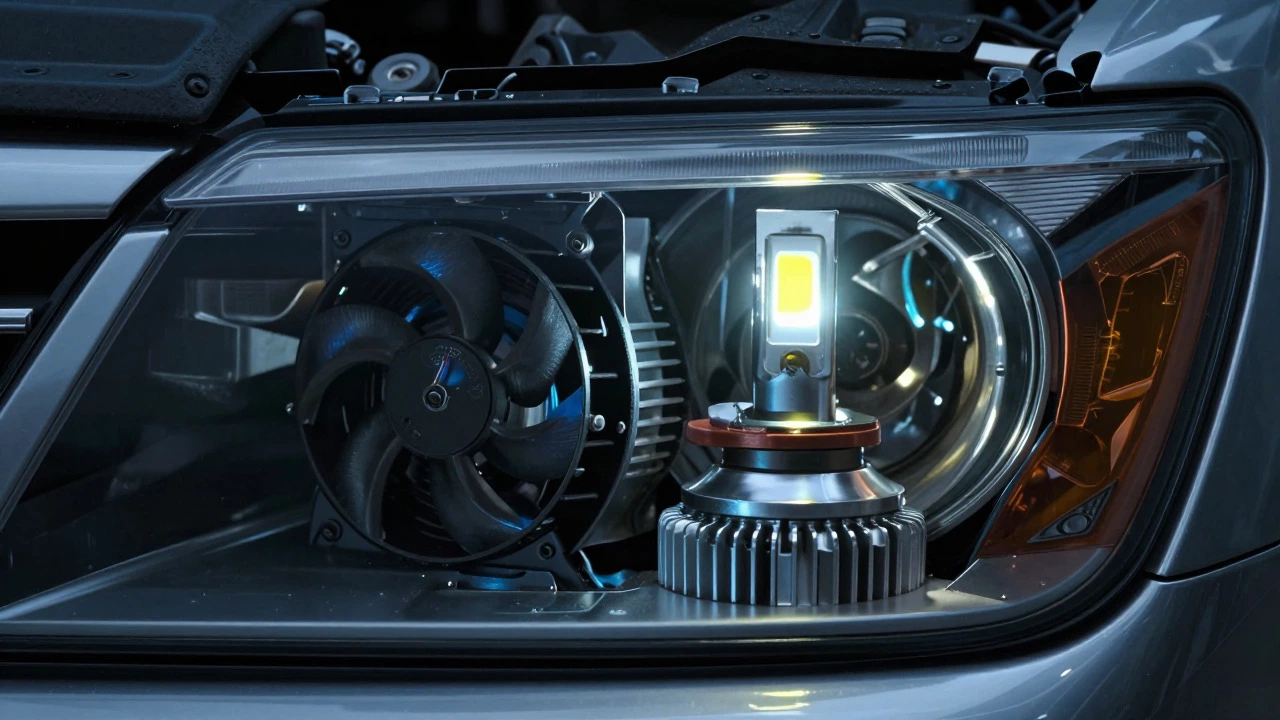
You might notice that LED bulbs come with bulky fans and large aluminum heatsinks. This is not just for show. LEDs are efficient at producing light, but they generate significant heat at the base where the electronics sit. Unlike halogens, which radiate heat outward, LEDs need to conduct heat away from the diodes quickly, or they burn out.
Old headlight housings are sealed units. They are designed to trap some heat to keep moisture out and maintain a stable internal temperature for the filament. When you shove a large LED module with a spinning fan into this tight space, two things happen:
- Airflow disruption: The fan pushes hot air around the sealed housing. This can melt the plastic lens over time, causing yellowing and cracking.
- Condensation issues: The rapid heating and cooling cycles caused by the LED driver can break the seal of the headlight, leading to fogging inside the lens.
If the LED bulb does not fit snugly into the socket, the vibration from the road will shake the connector loose. A loose connection leads to flickering lights, which is dangerous at night. Always check the physical dimensions of the LED base against your original halogen bulb. If the LED is longer or wider, it likely will not close the dust cap properly, exposing the electrical contacts to water and dirt.
Legal Nightmares: DOT and SAE Standards
This is where many DIYers get burned. Just because a product says "DOT Approved" on the box does not mean it is legal in your jurisdiction. The Department of Transportation (DOT) and the Society of Automotive Engineers (SAE) set strict standards for headlight output, color temperature, and beam pattern.
In the United States, federal law requires headlights to produce a yellowish-white light between 3000K and 4500K color temperature. Most aftermarket LEDs push 6000K or higher, which appears blue-white. While popular for aesthetics, this cooler light scatters more in rain and fog, reducing visibility. More importantly, if the beam pattern is scattered due to poor fitment, it fails the visual inspection required in states like New York, California, and Pennsylvania.
Many cheap LED kits are labeled "For Off-Road Use Only." This is a disclaimer used by manufacturers to avoid liability. If you install these on a street-legal vehicle, you are technically violating traffic codes. Police officers are trained to spot the harsh, scattered glare of poorly installed LEDs. A citation for improper lighting can cost more than the bulbs themselves.
Comparison: Halogen vs. LED in Stock Housings
| Feature | Stock Halogen | Aftermarket LED (Direct Swap) | Projector Conversion Kit |
|---|---|---|---|
| Beam Pattern Accuracy | High (Designed for housing) | Low (Scattered/Glare) | High (New optics included) |
| Color Temperature | 3200K - 4200K (Warm White) | 5000K - 6500K (Cool Blue) | Adjustable (Usually 5000K) |
| Lifespan | 450 - 1,000 hours | 30,000+ hours (if cooled) | 30,000+ hours |
| Installation Difficulty | Easy (Plug and Play) | Moderate (Fitment issues) | Hard (Requires cutting/welding) |
| Street Legality | Always Legal | Risky (Often fails inspection) | Varies (Check local laws) |
When It Actually Works: The Exceptions
Not all LED swaps are doomed. There are specific scenarios where putting LEDs in old housings makes sense. First, if your vehicle already has projector lenses, you have a much higher chance of success. Projectors focus light through a glass lens, so the exact position of the light source matters less than in reflector bowls. Even then, you must choose an LED bulb that mimics the size of the original filament.
Second, consider the quality of the LED module. Cheap bulbs use low-quality diodes and weak fans. High-end brands design their bulbs with smaller, more compact emitters that sit closer to the halogen focal point. Look for terms like "filament-style" or "multi-chip array" that claim to replicate the halogen geometry. These cost more upfront but offer a tighter beam pattern.
Third, off-road vehicles are a different story. If you drive a Jeep, truck, or ATV primarily on trails, beam pattern precision matters less than raw lumens. In this case, high-output LEDs with aggressive cooling are perfect. You do not need to worry about blinding highway commuters when you are navigating a forest path.
How to Install LEDs Safely and Effectively
If you decide to proceed with the swap, follow these steps to minimize risks. Do not rush the process. Proper installation is half the battle.
- Check the fit first: Before removing the old bulb, measure the depth and width of the LED bulb. Ensure the dust cap closes completely. If it does not, the seal is broken.
- Clean the connectors: Remove the old halogen bulb without touching the glass. Clean the socket contacts with electrical contact cleaner. Corrosion here causes voltage drops, which reduces LED brightness.
- Manage the wiring: LED drivers often have wires that stick out. Route these carefully so they do not interfere with the fan or the dust cap. Use zip ties to secure them away from moving parts.
- Align the bulb: Many LED bulbs have a specific orientation. Look for arrows or markings on the bulb base. Aligning the diodes correctly ensures the light hits the reflector at the right angle. Rotate the bulb slightly until the beam pattern looks centered on a wall test.
- Test before sealing: Turn on the lights and check for error codes on your dashboard. Some modern cars detect the lower power draw of LEDs and throw a "bulb out" warning. You may need resistors or a decoder module to fix this.
Alternatives to Direct Swaps
If your direct-swap LEDs fail to provide a clean beam, do not give up on better lighting. Consider these alternatives:
- HID Retrofit Kits: Xenon HID bulbs produce intense light and work better in some older housings than LEDs, though they also require ballasts and pose similar glare risks if not aligned perfectly.
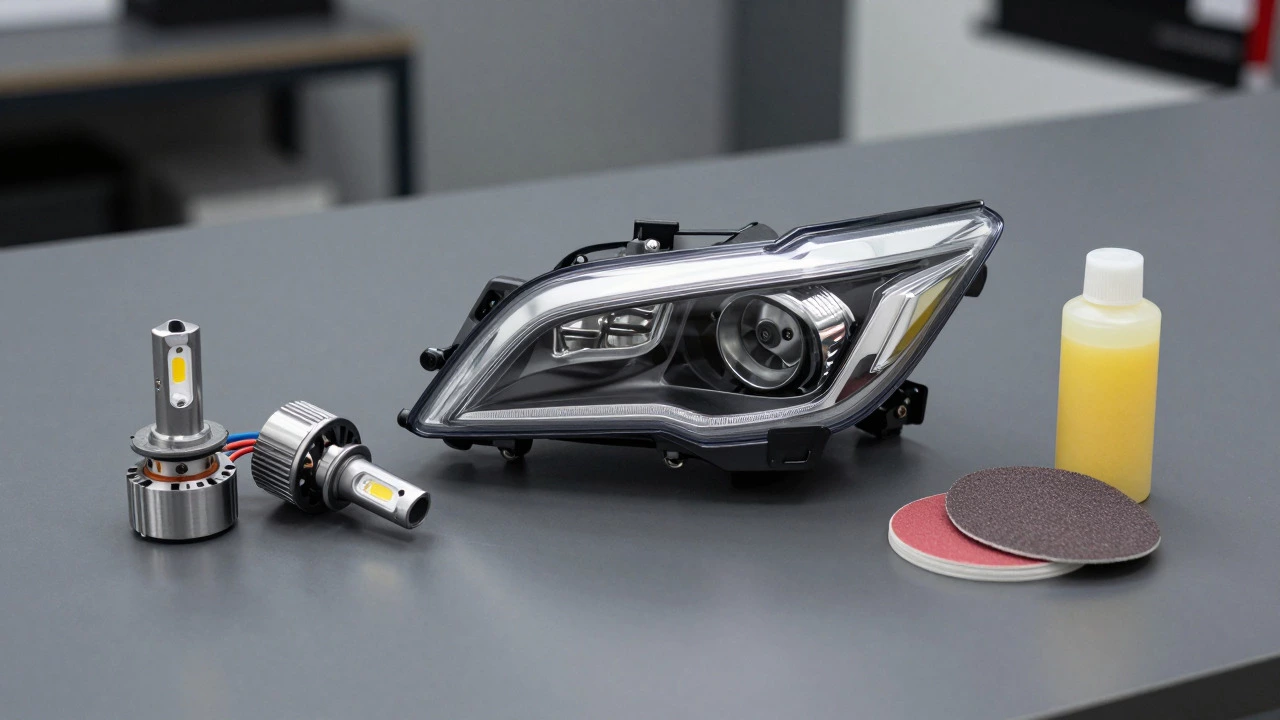
- Headlight Restoration: Sometimes, your problem is not the bulb but the lens. Yellowed, oxidized plastic scatters light regardless of the bulb type. Sanding and polishing your lenses can restore 80% of your lost light output instantly.
- Full Assembly Replacement: Buying complete LED headlight assemblies designed for your specific year and model guarantees proper fitment and beam pattern. It is more expensive but eliminates guesswork.
Frequently Asked Questions
Will LED bulbs damage my old headlight housing?
Yes, potentially. The heat generated by the LED driver and the airflow from the cooling fan can melt the plastic components of older housings over time. Additionally, if the dust cap does not seal tightly due to the larger size of the LED base, moisture can enter the housing, causing corrosion and fogging.
Are LED headlight bulbs legal in the US?
Legality varies by state. Federal law requires headlights to meet specific photometric standards. Many aftermarket LEDs scatter light too much, failing these standards. While some states enforce this strictly during inspections, others are lenient. Always check your local DMV regulations and look for bulbs marked as DOT compliant, though verify their actual performance.
Do I need resistors when installing LED bulbs?
In many modern vehicles, yes. Cars monitor current draw to detect burnt-out bulbs. LEDs use significantly less power than halogens, tricking the computer into thinking the bulb is dead. This triggers a dashboard warning light. Resistors or CANbus decoders mimic the higher power draw of halogens to prevent this error code.
Why do my new LED headlights blind oncoming drivers?
This is usually due to poor beam pattern alignment. Older reflector housings are designed for the small focal point of a halogen filament. LEDs have a larger emitter area, causing light to scatter upwards and sideways instead of projecting forward. Rotating the bulb slightly or switching to a projector-based system can fix this.
How long do LED headlight bulbs last compared to halogens?
Halogen bulbs typically last between 450 and 1,000 hours. Quality LED bulbs can last 30,000 hours or more. However, this lifespan assumes proper cooling. If the LED is installed in a tight space with poor airflow, the heat can degrade the diodes and driver circuitry, significantly shortening its life.