Lowering Springs & Stock Shocks Compatibility Checker
Enter your planned drop amount and assess the condition of your current dampers to get a personalized recommendation.
Enter your drop amount and check the boxes above to see your compatibility verdict.
You’ve got the lowering springs in your hands, ready to drop that stance. But before you wrench off the old ones, you’re probably wondering: do I actually need new shocks? Or can I just slap these on my existing dampers and call it a day? It’s a common question for anyone looking to save money or avoid a full suspension overhaul. The short answer is yes, you physically can install lowering springs with your factory shocks. But whether you *should* depends entirely on how much height you’re dropping and what you expect from the car’s daily drivability.
Let’s break down the mechanics, the risks, and the real-world outcomes so you can make a decision that doesn’t leave you stranded at the next speed bump.
The Physics of Dropping Your Car
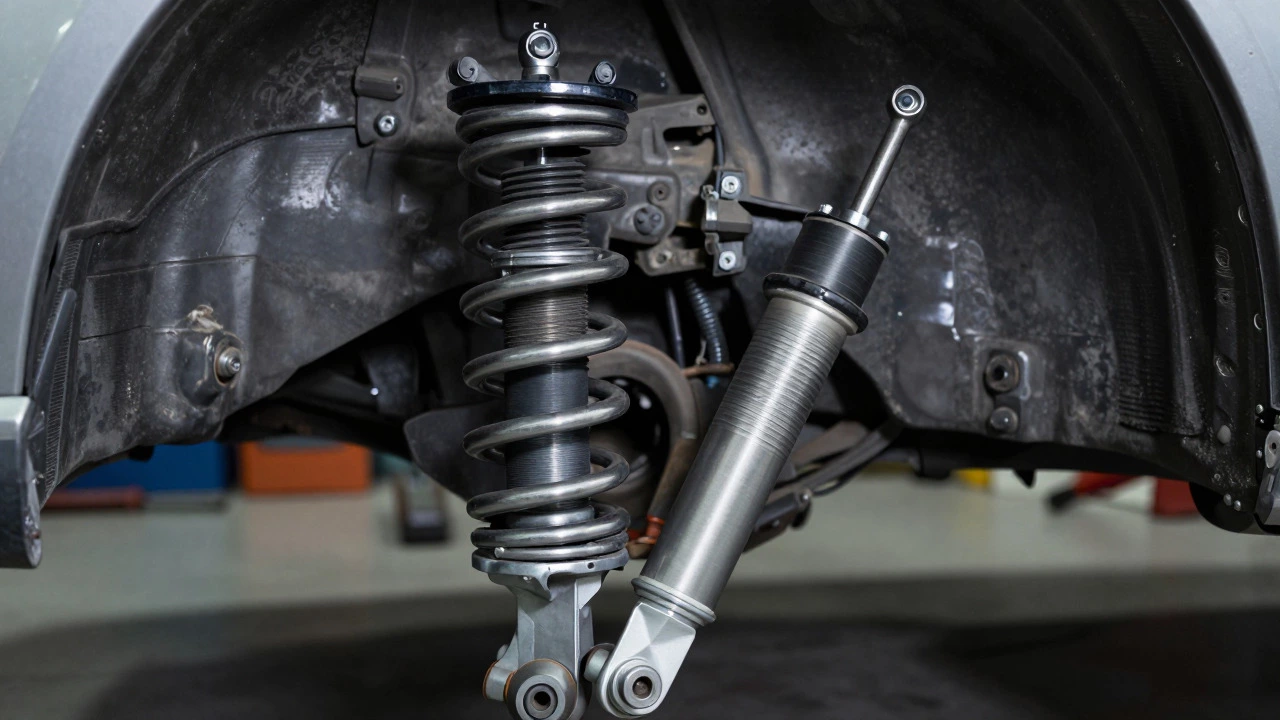
To understand why mixing parts matters, you have to look at how a suspension system works. A standard independent suspension relies on two main components working together: the spring and the shock absorber (or strut). The spring holds the weight of the car and determines its ride height. The shock controls the movement of the spring, damping out the oscillations when you hit a bump or take a corner.
When you replace the factory spring with a shorter one, you change the geometry of the entire setup. Factory springs are tuned to work with factory shocks at a specific preload. When you shorten the spring, you reduce the amount of travel available before the suspension hits its limits. If the shock isn't designed to handle this reduced travel, it can start to bottom out more frequently. This means the metal end of the shock hits the body mount or the chassis, causing a harsh thud and potentially damaging the internal seals over time.
Think of it like wearing running shoes with the wrong sole thickness. They fit, but your stride changes, and eventually, something hurts. In automotive terms, that 'hurt' is usually premature wear on bushings, ball joints, or the shock internals themselves.
How Much Drop Is Safe?
This is where most people get confused. There is no single 'safe' number because every car has different suspension geometry. However, we can use general rules of thumb based on industry standards and community experience.
- 1 to 1.5 inches (25-40mm): This is generally considered the 'sweet spot' for using stock shocks. At this level, the reduction in travel is minimal. Most factory dampers have enough reserve to handle this drop without significant issues. The ride quality might feel slightly firmer, but it remains comfortable for daily driving.
- 1.5 to 2 inches (40-50mm): This is the gray area. You might notice the car feels stiffer, especially over rough pavement. If your stock shocks are already worn out (leaking oil, making noise), this is a risky move. If they are relatively new and high-quality OEM units, you can likely get away with it, but expect a bouncier ride.
- 2+ inches (50mm+): At this point, the risk of bottoming out increases significantly. Unless your car has a very long stroke suspension (like some trucks or SUVs), dropping more than 2 inches with stock shocks often leads to poor handling and accelerated component wear. This is where most experts recommend upgrading to performance shocks or coilovers.
If you are aiming for a subtle, clean look without sacrificing too much comfort, staying under 1.5 inches is your safest bet. If you want that aggressive, slammed look, be prepared to invest in better dampers.
Ride Quality: What Will It Actually Feel Like?
Here is the reality check. Even if your stock shocks are in perfect condition, adding lowering springs will change the ride character. Why? Because lowering springs are almost always stiffer than factory springs. To support the car at a lower height without sagging, manufacturers increase the spring rate (the stiffness of the coil).
When you combine a stiffer spring with a softer, slower-reacting stock shock, you get a specific type of ride quality known as 'bouncy.' The spring compresses quickly over small bumps, but the stock shock doesn't react fast enough to control the rebound. This results in the car continuing to oscillate after hitting a pothole. You’ll feel it most on uneven roads or when carrying passengers.
In contrast, if you upgrade to performance shocks that match the spring rate, the damping force is calibrated to stop the spring's movement immediately. This creates a smoother, more controlled ride, even at lower heights. So, while saving money on shocks is tempting, you are trading away ride refinement. For many drivers, that trade-off is acceptable. For others, who drive long distances daily, it becomes a dealbreaker.

Signs Your Stock Shocks Aren't Ready
Before you commit to this combination, inspect your current dampers. If they show any signs of failure, don't mix them with new springs. Here is what to look for:
- Oil Leaks: Check the piston rod for oily residue. If you see dark grease or oil, the seals are failing. A leaking shock cannot provide consistent damping, which makes the bouncy effect worse.
- Excessive Bounce: Press down hard on one corner of the car and let go. It should settle back up within one or two cycles. If it keeps bouncing, the shock is dead.
- Noise: Listen for clunking or knocking sounds when going over bumps. This could indicate worn internal components or loose mounts.
If your shocks pass these tests, you are in good shape. If they fail, consider replacing them with a basic set of gas-charged performance shocks. It’s a cheaper investment than buying full coilovers, but it will dramatically improve the result of your spring swap.
Comparison: Stock Shocks vs. Performance Dampers
To help you decide, here is a direct comparison of the two setups. This table highlights the key differences in cost, performance, and longevity.
| Feature | Stock Shocks + Lowering Springs | Performance Shocks + Lowering Springs |
|---|---|---|
| Cost | Low (Springs only) | Medium (Springs + Shocks) |
| Ride Comfort | Bouncy, less refined | Smoother, controlled |
| Handling | Adequate for street, less precise | Improved stability and grip |
| Component Wear | Potentially higher on bushings/ball joints | Lower, due to proper damping |
| Best For | Subtle drops (< 1.5"), budget builds | Daily drivers, track days, larger drops |
Notice that the 'best for' column is critical. If you are just doing a cosmetic update for a weekend project car, stock shocks are fine. If this is your primary vehicle and you drive on rough Australian roads, the extra cost for performance dampers is worth it for peace of mind.

Common Mistakes to Avoid
Even if you decide to stick with stock shocks, there are pitfalls that can ruin your setup. Avoid these common errors:
- Mixing Brands: Don't buy cheap, unbranded springs. Poor quality springs can have inconsistent rates, leading to uneven ride height. Stick to reputable brands that specify their spring rate and load capacity.
- Ignoring Alignment: Lowering your car changes the camber and toe angles. After installation, get a professional alignment. Running bad alignment with lowered suspension will eat through your tires quickly and cause uneven wear.
- Overloading the Car: If you regularly carry heavy loads in the trunk or back seat, the rear springs may sag further. This can lead to excessive bottoming out. Consider heavier rear springs if this applies to you.
Also, keep an eye on your tire clearance. Lowering the car reduces the space between the wheel arch and the tire. Make sure you have enough room for steering lock and suspension travel, especially if you plan to turn the wheels fully while parked.
FAQ
Will lowering springs damage my stock shocks?
Not necessarily, but it can accelerate wear. If the drop is modest (under 1.5 inches) and the shocks are in good condition, they will last their normal lifespan. However, frequent bottoming out or excessive bouncing can stress the internal seals and mounts, leading to earlier failure.
What is the maximum drop I can do with stock shocks?
Generally, 1.5 to 2 inches is the upper limit for most passenger cars. Beyond this, the risk of bottoming out and poor ride quality increases significantly. Always check the specific manufacturer recommendations for your car model, as suspension designs vary.
Are lowering springs worth it if I'm not changing the shocks?
Yes, if your goal is aesthetics and you accept a slightly stiffer, bouncier ride. Many owners find the visual improvement worth the minor compromise in comfort. Just ensure the springs are high quality and properly installed to avoid uneven ride height.
Do I need to align my car after installing lowering springs?
Absolutely. Lowering changes the suspension geometry, which affects camber and toe. Without a proper alignment, you will experience uneven tire wear and unpredictable handling. Get an alignment done within a few weeks of installation.
Can I use lowering springs on a car with electronic suspension?
It depends on the system. Some electronic suspensions allow manual adjustment, while others are closed systems. Check with your mechanic or the spring manufacturer to ensure compatibility. In some cases, you may need to disable certain electronic features to prevent error codes.