Air Filter Impact Calculator
This calculator demonstrates why performance air filters don't significantly improve fuel economy for everyday driving. Your car's engine control unit (ECU) maintains a precise air-to-fuel ratio, so any extra airflow is compensated by adding more fuel.
Your Results
Enter your vehicle information above to see the impact of different air filters.
Important Note: Performance air filters won't meaningfully improve your fuel economy under normal driving conditions. Your car's ECU automatically adjusts fuel injection to maintain the correct air-fuel ratio.
Ever seen an ad for a performance air filter that promises better fuel economy along with more power? It sounds too good to be true-and in most cases, it is. You’re not alone if you’ve wondered: does a better air filter increase MPG? The short answer? Not really. Not in any meaningful way for everyday driving.
What Performance Air Filters Actually Do
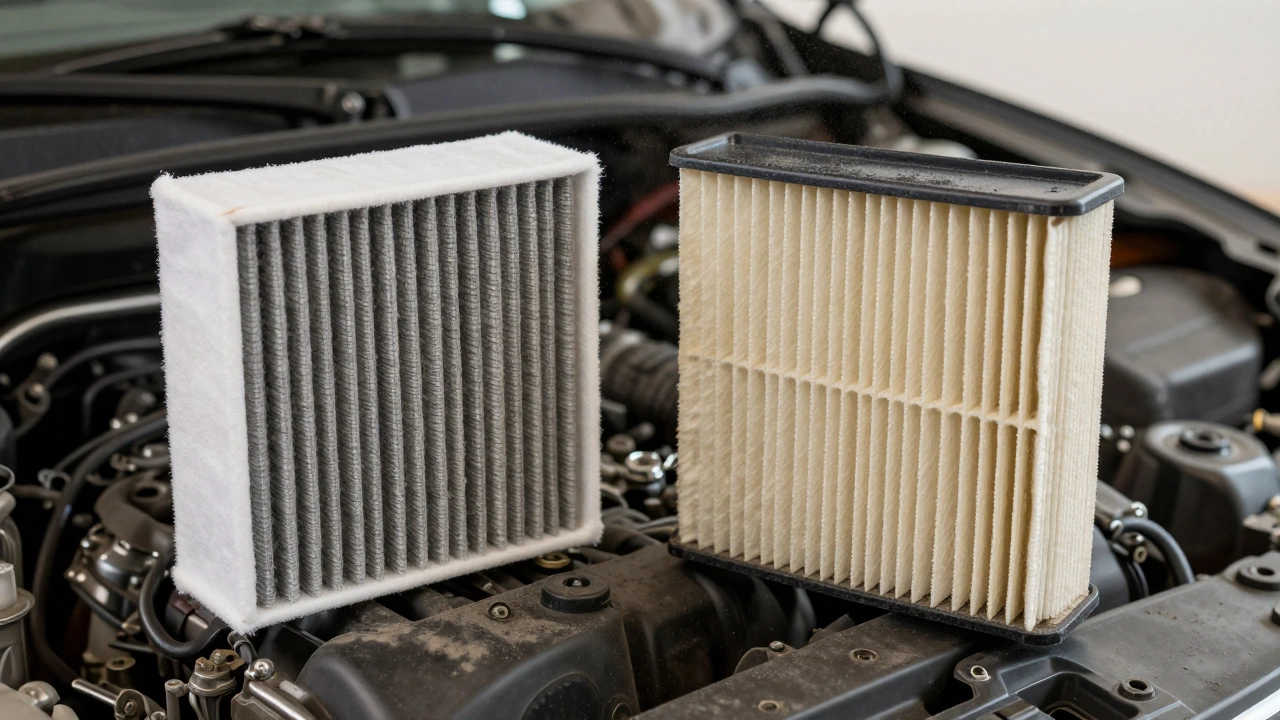
Performance air filters-usually made from cotton gauze or foam and sold by brands like K&N, AEM, or Injen-are marketed as reusable upgrades that flow more air than stock paper filters. They’re often paired with cold air intake kits, which reroute air from outside the engine bay to reduce heat and increase density. The theory is simple: more air = more oxygen = more combustion = more power. And that part? It’s mostly true.
On a dynamometer, a high-flow filter can add 5 to 15 horsepower in some older, naturally aspirated engines. That’s noticeable if you’re pushing your car hard on a track. But for daily driving? You’ll feel it only if you’re actively trying to notice it. And fuel economy? That’s where things fall apart.
Why MPG Doesn’t Improve-Even When Airflow Increases
Here’s the catch: your car’s engine control unit (ECU) is designed to maintain a precise air-to-fuel ratio-usually around 14.7:1 for gasoline engines. It doesn’t care if you’ve swapped out a paper filter for a cotton one. It uses sensors-MAF (mass airflow), O2, and others-to measure how much air is coming in and adjusts fuel injection accordingly.
If your new filter lets in more air, the ECU just adds more fuel to match it. The result? Same air-fuel ratio, same combustion efficiency, same fuel consumption. You’re not getting more miles per gallon-you’re just burning slightly more fuel to match the extra airflow.
Studies from the Society of Automotive Engineers (SAE) and independent testing by Consumer Reports show no measurable fuel economy gain from aftermarket air filters in normal driving conditions. In fact, some tests showed a 1-2% decrease in MPG because the engine was working harder to pull air through less restrictive filters, especially at low RPMs.
When a Better Air Filter Might Help (Slightly)
There are two real-world situations where you might see a tiny MPG bump:
- Your stock filter is clogged. If you’ve driven 100,000 km without changing your factory paper filter, it’s probably choked with dust. A clean filter-whether stock or aftermarket-will restore lost efficiency. But that’s not an upgrade; it’s maintenance.
- You drive at high speeds on open roads with perfect air quality. In rare cases, like long highway trips in clean desert air, a high-flow filter might reduce intake restriction enough to lower pumping losses. But even then, gains are under 0.5%-barely enough to save you a few cents per tank.
For most people, the real benefit of a performance filter is longevity. You can wash and reuse it for 100,000+ km, while paper filters need replacing every 15,000 to 20,000 km. That’s a cost-saving over time, not a fuel-saving one.

The Hidden Costs: Dirt, Damage, and Warranty Risks
Performance filters are more porous than paper ones. That’s why they flow better. But that also means they let in more fine dust and debris. In dusty environments-like rural Australia, where red dirt kicks up easily-this can be a problem.
Some mechanics have seen premature wear on throttle bodies and MAF sensors from oil-coated cotton filters. The oil used to clean these filters can contaminate the MAF sensor, causing inaccurate readings and triggering check engine lights. Fixing that? It costs more than replacing five stock filters.
And if your car is under warranty? Many manufacturers will void powertrain coverage if they find an aftermarket air filter installed, especially if engine damage occurs. You’re trading a $20 paper filter for a potential $5,000 repair bill.
What Actually Improves MPG?
If you’re serious about better fuel economy, skip the air filter hype and focus on real upgrades:
- Proper tire pressure-Underinflated tires can drop MPG by up to 3%. Check them monthly.
- Regular oil changes with synthetic motor oil-Low-friction oils can improve efficiency by 1-2%.
- Lightening your car-Remove roof racks, heavy cargo, and unnecessary weight. Every 45 kg adds about 1-2% to fuel use.
- Smooth driving habits-Avoid hard acceleration and excessive idling. Aggressive driving can slash MPG by 30%.
- Engine tuning-A professional tune that optimizes timing and fuel maps can yield real gains, but it’s not a DIY job.
These changes cost less, are safer, and actually work. A performance air filter won’t.

Who Should Install One?
Only two types of drivers benefit from performance air filters:
- Track enthusiasts who want every bit of power and don’t care about fuel cost or long-term engine wear.
- Off-road drivers in clean, dry environments who need a reusable filter that can be cleaned after muddy runs.
If you’re driving to work, taking the kids to school, or commuting on Brisbane’s motorways, you’re not gaining anything. You’re just spending money on a marketing myth.
Bottom Line: It’s Not About the Filter
Performance air filters don’t increase MPG. They might improve throttle response slightly and save you money on replacements over 10 years. But they won’t make your car more efficient. The idea that a better filter equals better fuel economy is a classic case of correlation being mistaken for causation.
People install them, then notice they’re driving more aggressively because the engine sounds louder. That’s why their MPG stays the same-or drops.
Stick with the factory filter. Change it on schedule. Keep your tires inflated. Drive smoothly. Those are the real ways to save fuel. Save your cash for something that actually moves the needle.
Do K&N air filters really improve fuel economy?
No, K&N air filters do not improve fuel economy under normal driving conditions. While they allow more airflow, the car’s engine control unit adjusts fuel injection to match, keeping the air-fuel ratio the same. Any claimed MPG gains are typically due to driver behavior changes or faulty measurements, not the filter itself.
Can a dirty air filter hurt fuel economy?
Yes, a severely clogged factory air filter can reduce fuel economy by up to 10%. This happens because the engine has to work harder to pull air through the blocked filter, which increases pumping losses. Replacing a dirty filter with a clean one-stock or aftermarket-can restore lost efficiency, but that’s maintenance, not an upgrade.
Are performance air filters worth the cost?
Only if you’re willing to pay upfront for long-term reuse. A $100 performance filter lasts 100,000+ km, while a $20 paper filter needs replacing every 15,000-20,000 km. Over 10 years, you might save $100-$150. But you won’t save on fuel. If you’re looking to cut fuel costs, focus on driving habits and tire pressure instead.
Do cold air intakes improve MPG?
Cold air intakes are designed to increase power, not fuel economy. While colder air is denser and contains more oxygen, modern engines compensate for this by adding more fuel. In real-world tests, cold air intakes show no consistent MPG improvement. Some even reduce efficiency due to increased turbulence or heat soak from engine bay exposure.
Will a performance air filter void my warranty?
It can. Many manufacturers state that aftermarket air filters can void powertrain warranties if engine damage occurs and the filter is deemed a contributing factor. While the Magnuson-Moss Warranty Act protects consumers in the U.S., enforcement is inconsistent. In Australia, warranty terms are strictly enforced, and dealers often refuse claims if non-OEM parts are installed.