
Suspension Travel Calculator
Shock Travel Analysis
When you lower your car with springs, you’re not just changing how it looks-you’re changing how it drives. And one of the biggest worries people have is whether lowering springs will hurt shocks. The short answer? Not always. But if you don’t pick the right setup or install it properly, you can absolutely wreck your shocks faster than you think.
How Lowering Springs Change Your Suspension
Lowering springs are shorter and stiffer than factory springs. They reduce ride height by 1 to 2 inches on most cars, giving you that aggressive, hunkered-down look. But here’s what most people don’t realize: when you shorten the spring, you’re also reducing the amount of travel your suspension has left. That means your shocks have less room to absorb bumps, potholes, and uneven pavement.Shocks don’t just hold up your car-they control how the springs move. They dampen the bounce, prevent oscillation, and keep your tires planted. If the springs are too short, your shocks get compressed too far at ride height. That’s called preload. Too much preload means the shock’s internal components are already fighting against pressure before you even hit a bump.
Why Preload Kills Shocks
Think of a shock absorber like a spring-loaded piston. It has a range of motion-say, 4 inches of travel. When you install lowering springs that reduce ride height by 1.5 inches, you’re using up nearly half of that travel just to hold the car at its new height. Now, when you hit a speed bump, the shock doesn’t have enough room to extend back out. It bottoms out. Constantly.That’s bad. Bottoming out doesn’t just feel awful-it crushes the internal valving, bends the piston rod, and leaks fluid. You’ll start hearing clunks over bumps. Your car will feel floaty or jarring. And eventually, the shocks will fail. Not in 50,000 miles. Maybe in 15,000.
Factory shocks are designed to work with factory springs. They’re not built to handle the extra stress of being permanently compressed. Most stock shocks are rated for 2 to 3 inches of total travel. If your lowering springs cut that down to under 1 inch, you’re asking for trouble.
Not All Lowering Springs Are Created Equal
Some brands make lowering springs with smarter geometry. They don’t just cut length-they adjust the spring rate and mounting points to preserve shock travel. Brands like H&R, Eibach, and KW make lowering kits that are engineered to work with OEM shocks… for a while.But here’s the catch: even the best lowering springs still reduce travel. If you’re lowering more than 1.5 inches on a daily driver, you’re pushing it. If you’re doing 2+ inches on a sedan or SUV? You’re asking your shocks to work overtime every single day.
Track-focused kits? Those are built for short-term use. They’re not meant for potholes, speed bumps, or driveway ramps. If you’re driving on rough roads, or even just a lot of highway expansion joints, your shocks will wear out faster.
What Happens When Shocks Fail
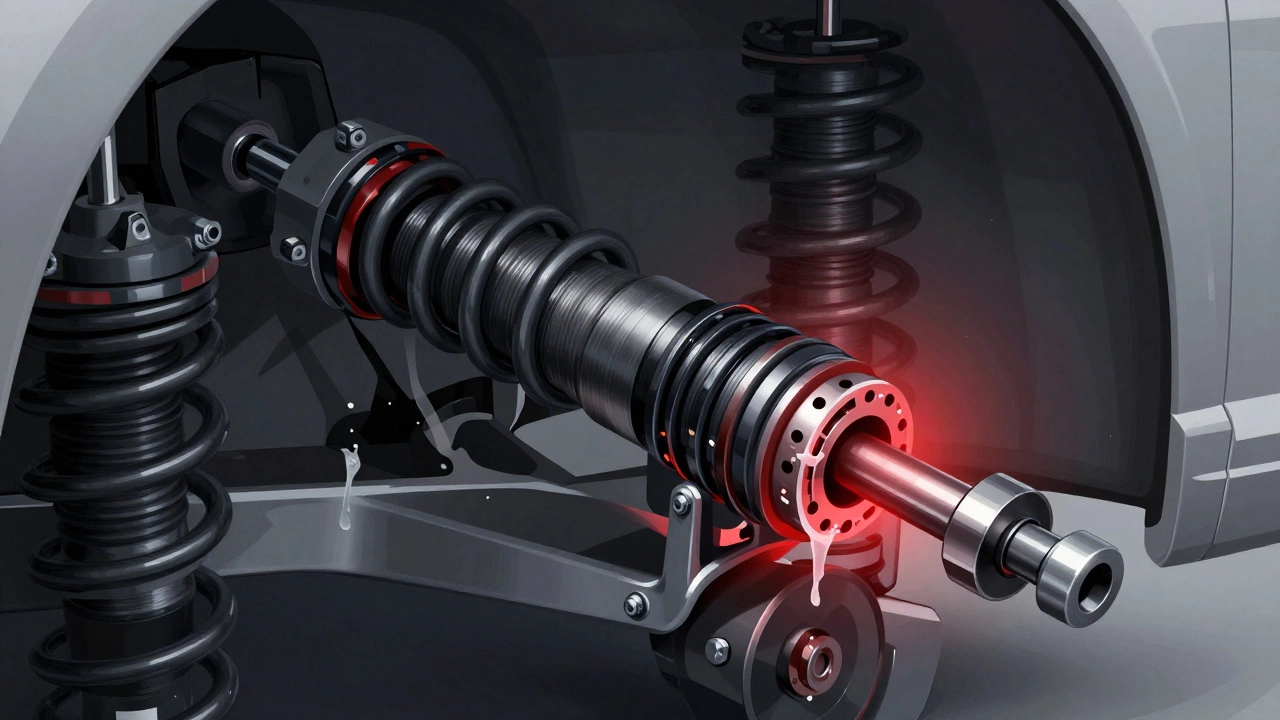
Bad shocks don’t just make your ride uncomfortable-they make it dangerous. Here’s what you’ll notice before they die:- Excessive bouncing after hitting a bump
- Front-end diving under hard braking
- Wandering or unstable steering on highways
- Uneven tire wear (cupping or feathering)
- Loud clunking or knocking from the suspension
These aren’t just annoyances. They reduce braking distance, hurt cornering grip, and make your car harder to control in rain or wind. A 2023 study by the Australian Road Safety Authority found that vehicles with worn shocks took 12% longer to stop on wet pavement. That’s the difference between avoiding a crash and hitting it.
Can You Save Your Shocks? Yes-If You Act Fast
If you already installed lowering springs and didn’t replace the shocks, you’re not doomed. But you need to check them now.Here’s how:
- Push down hard on each corner of the car. Let go. If it bounces more than once, your shocks are worn.
- Look for oil leaks around the shock body. Any wetness means internal seal failure.
- Check for bent or damaged shock rods. Even a slight bend can cause uneven wear.
- Drive on a rough road and listen for clunks. They’re the sound of internal parts colliding.
If any of these signs are there, replace the shocks before they ruin your control arms, bushings, or even your wheels.
The Right Way to Lower Your Car
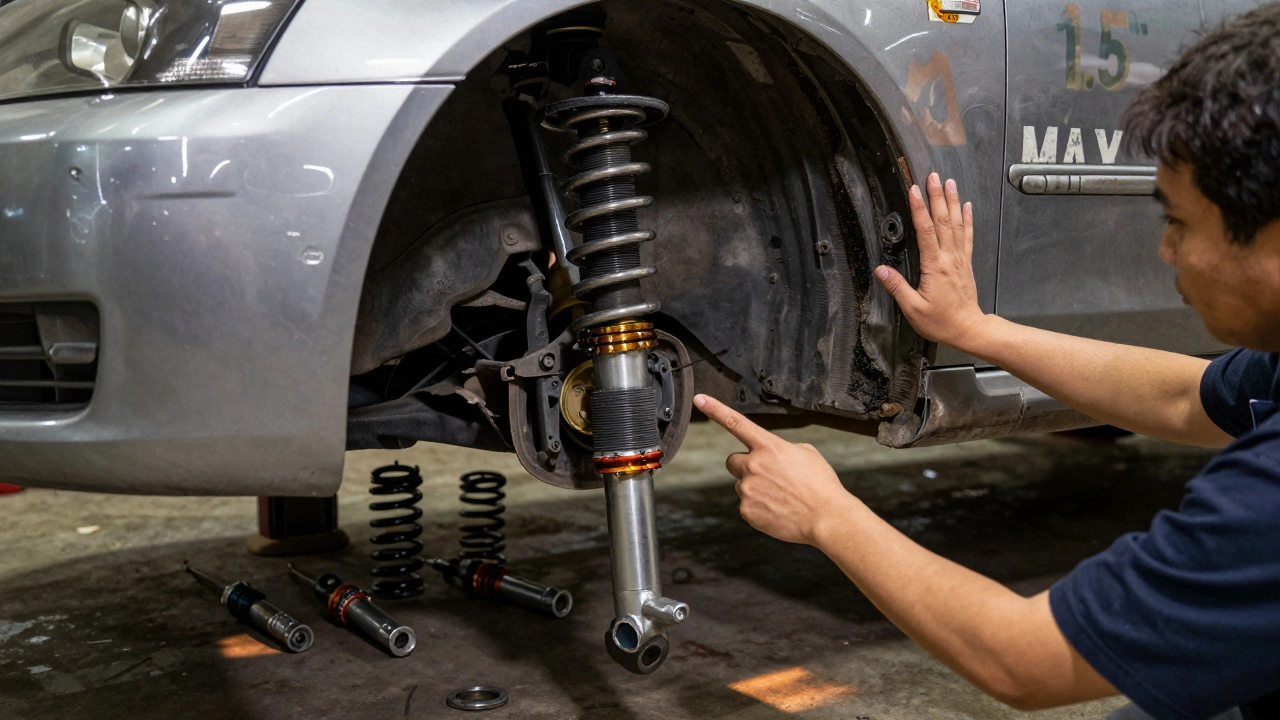
If you want to lower your car without killing your suspension, here’s what actually works:- Stay under 1.5 inches of drop on daily drivers
- Pair lowering springs with performance shocks (like Koni, Bilstein, or Öhlins)
- Never use lowering springs alone on cars with factory struts (most sedans and hatchbacks)
- Consider coilovers if you want more than 1.5 inches of drop-they let you adjust ride height and damping
- Get a professional alignment after installation. Improper camber eats tires and stresses shocks
Coilovers aren’t cheap, but they’re the only real solution if you want serious lowering without sacrificing safety. They let you dial in the perfect ride height and damping for your driving style. And they’re built to handle the stress that lowering springs put on stock shocks.
Bottom Line: It’s Not the Springs-It’s the Setup
Lowering springs themselves don’t automatically destroy shocks. But using them without upgrading your dampers? That’s a recipe for expensive failure. Most people think it’s a simple swap. It’s not. It’s a system upgrade.If you’re just after looks and drive on smooth roads occasionally, you might get away with it for a couple of years. But if you drive daily, hit potholes, or care about safety and control? Replace your shocks at the same time you install the springs. Or don’t lower at all.
The money you save by skipping new shocks? You’ll spend it twice over when you need new control arms, tires, and replacement shocks-all at once.