Wheel Spacer Safety & Compliance Checker
Select your vehicle type and enter measurements to check safety limits.
Physical Limits Assessment
Thread Engagement Check
Required Modifications Checklist
You want your wheels to sit flush with the fenders. It looks aggressive, it improves stability, and frankly, it makes the car look like it belongs on a track rather than in a grocery store parking lot. But then you hit the wall-literally or figuratively. How thick can you go before you start grinding against the suspension components or failing an inspection? There is no single magic number that applies to every car under the sun, but there are hard physical limits and legal boundaries that dictate what is allowable wheel spacer thickness.
The short answer? Most street cars can safely handle 5mm to 15mm spacers without modification. Push past 20mm, and you enter a zone where you likely need extended wheel studs, hub-centric rings, and maybe even new brake calipers. Go beyond 30mm, and you’re essentially building a wide-body kit project. Let’s break down exactly where those lines are drawn.
The Physical Limits: What Your Car Can Actually Take
Before we talk about laws, let’s talk about physics. Your wheel assembly isn’t just a circle of metal; it’s a complex interaction between the hub, the axle, the control arms, and the brake calipers. When you add a spacer, you push the wheel outboard. This changes the scrub radius and increases the leverage on your ball joints and tie rods.
For most modern front-wheel-drive (FWD) vehicles, the clearance between the inner tire sidewall and the strut or spring is tight. You might get away with 5mm to 10mm. If you try to shove a 25mm spacer onto a compact hatchback, you’ll likely find the tire rubbing against the coilover sleeve when you turn the steering lock-to-lock.
| Vehicle Type | Safe Range (No Mods) | Risk Zone | Required Modifications |
|---|---|---|---|
| Compact/FWD | 3mm - 10mm | > 15mm | Extended Studs, Hub Rings |
| Sedan/RWD | 5mm - 15mm | > 20mm | Extended Studs, Caliper Check |
| Truck/SUV | 10mm - 25mm | > 30mm | Extended Studs, Suspension Geometry Review |
| Track/Apex | Variable | N/A | Full Engineering Analysis |
Notice the trend? Trucks have more room to play with because their suspension geometry is designed for articulation and heavy loads. Sports sedans are tighter. Always measure your current clearance with a tape measure or a specialized gauge before buying anything online. Don’t guess.
The Legal Line: What Does the Law Say?
Here is where things get tricky. "Allowable" means two different things depending on who you ask. To a mechanic, allowable means "won't break." To a police officer or DMV inspector, allowable means "compliant with local regulations."
In the United States, there is no federal law governing wheel spacer thickness. It falls to state and local jurisdictions. Many states follow guidelines similar to those set by the TÜV in Germany, which is often considered the gold standard for automotive modifications globally. The general rule of thumb adopted by many US inspectors is that the wheel must not protrude beyond the fender flare unless covered by a mud flap.
If your spacer pushes the tire outside the bodywork, you usually need to install a wider fender flare or a mud flap that covers at least 90% of the tire tread width. Some states require the wheel offset plus the spacer thickness to keep the tire within a specific distance from the centerline of the vehicle. If you fail this check, you could face fines or be forced to remove the spacers during a safety inspection.
Hub-Centric vs. Lug-Centric: Why It Matters for Thickness
You cannot discuss allowable thickness without discussing how the spacer attaches. There are two main types: hub-centric and lug-centric.
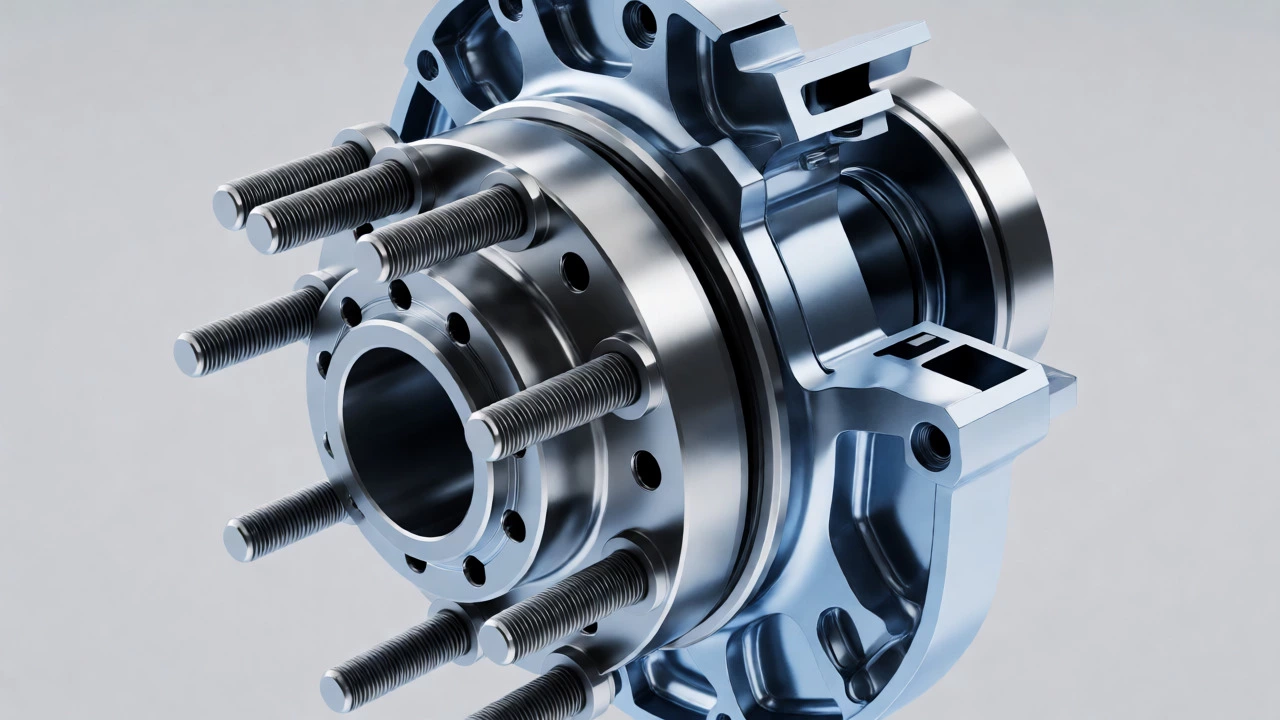
A hub-centric spacer is a ring that fits over the vehicle's hub pilot, ensuring the wheel is perfectly centered. This is critical for anything thicker than 5mm. Without a hub-centric ring, the weight of the car rests entirely on the lug nuts. Over time, this causes stress fractures and loose wheels.
A lug-centric spacer relies solely on the lug nuts to center the wheel. These are fine for very thin shims (under 5mm) used to correct minor brake caliper clearance issues. But if you are going for 20mm of stance, do not use a cheap lug-centric plate. You need a machined aluminum spacer with a precise bore that matches your hub diameter exactly.
The Stud Length Problem
Every millimeter of spacer thickness eats into your thread engagement. Standard factory wheel studs are designed to engage with a specific number of threads on the lug nut. When you add a spacer, you reduce the amount of stud sticking out for the nut to grab.
Most mechanics recommend a minimum of six full turns of thread engagement. For M12x1.5 studs (common on European cars), that means you need roughly 9-10mm of exposed stud after the spacer. If you add a 15mm spacer to a car with only 25mm of stud length, you’re left with 10mm. That’s cutting it close. Add a 20mm spacer, and you’re down to 5mm. That’s dangerous.
Solution? Extended wheel studs. Do not rely on longer lug nuts alone. Longer nuts shift the clamping force further up the stud, increasing the bending moment and risk of shearing. Replace the studs themselves with high-grade, heat-treated steel extensions specifically rated for your vehicle.

Impact on Handling and Wear
Increasing the track width via spacers generally improves cornering stability. It lowers the center of gravity slightly relative to the roll axis and gives the tires more grip during lateral acceleration. Sounds great, right?
But there is a trade-off. Wider track width increases the load on outer CV joints and wheel bearings. On a daily driver doing 15,000 miles a year, you might notice premature wear on these components if you run excessive spacers. Ball joints also suffer. The increased angle forces them to work harder during suspension compression and rebound.
Think of it this way: You are trading component longevity for aesthetics and slight handling gains. Is a 20mm spacer worth replacing a $150 ball joint every three years instead of every seven? Only you can decide that.
How to Determine Your Max Allowable Thickness
Ready to buy? Follow this checklist to find your personal limit:
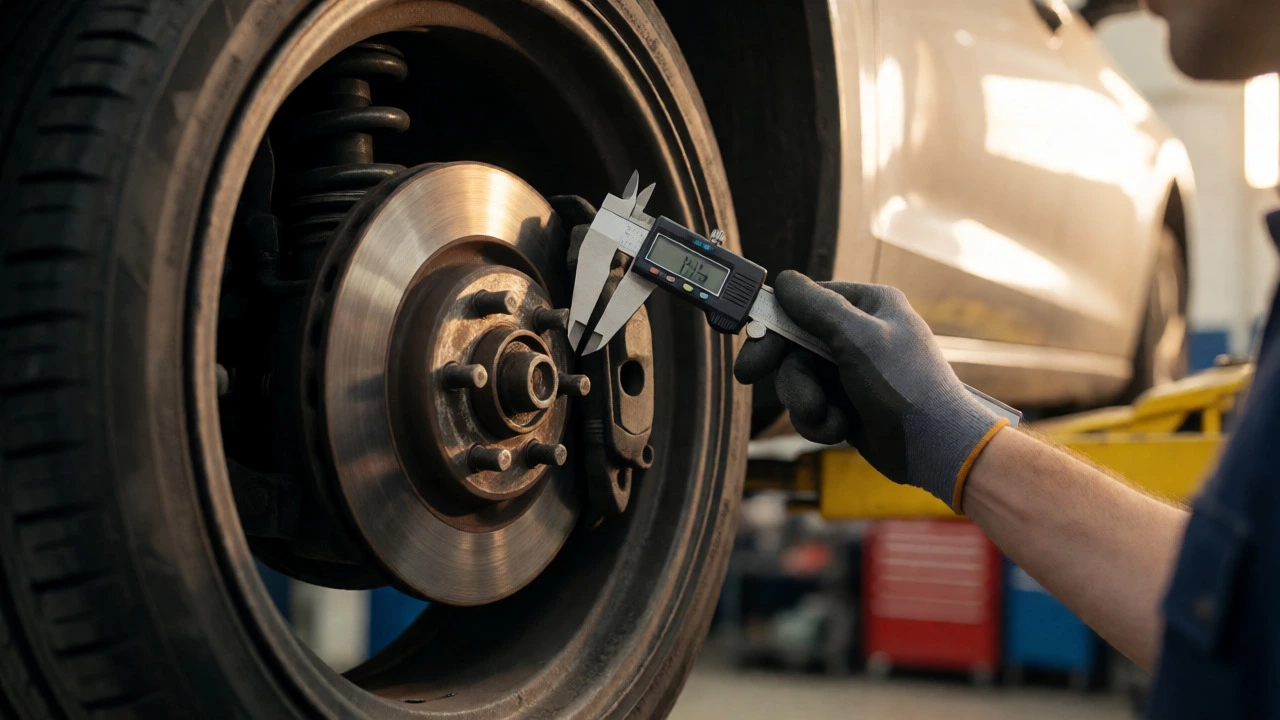
- Measure Current Clearance: With the wheel installed, measure the gap between the inner tire sidewall and the nearest suspension part (strut, spring, or subframe). Subtract 5mm as a safety buffer for suspension travel.
- Check Outer Fender: Measure how far the current wheel sits inside the fender lip. Decide if you want flush or protruding. Remember the mud flap rules.
- Verify Stud Length: Remove one wheel and measure the exposed stud length. Calculate remaining thread engagement after adding your desired spacer.
- Consult Local Laws: Call your local DMV or a reputable alignment shop. Ask specifically about "wheel protrusion beyond fender" regulations in your county.
- Start Small: Buy 5mm spacers first. Drive for a week. Check for rubbing. Then consider moving to 10mm if needed.
Don't buy a 25mm set on day one hoping they will fit. Test the waters. It is cheaper to sell small spacers on eBay than to explain to an insurance adjuster why your wheel flew off due to stripped studs.
Is a 20mm wheel spacer too much?
For most passenger cars, 20mm is pushing the limit for stock components. While it may physically fit, you almost certainly need extended wheel studs to maintain safe thread engagement. Additionally, 20mm significantly increases leverage on wheel bearings and ball joints, potentially leading to premature failure. It is acceptable if done correctly with high-quality parts, but it requires more maintenance attention than thinner spacers.
Do wheel spacers affect alignment?
Yes, adding spacers changes the effective track width and can alter the scrub radius and kingpin inclination angles. While simple spacers don't change camber or toe directly, the change in geometry can cause uneven tire wear if the alignment was previously set for stock wheels. It is highly recommended to get a professional alignment after installing spacers thicker than 10mm to ensure optimal tire life and handling.
Are wheel spacers illegal?
Wheel spacers themselves are not illegal in most places, but their application can be. If the spacer causes the tire to extend beyond the vehicle's bodywork without proper coverage (like a mud flap), it may violate local safety codes. Furthermore, if the installation results in insufficient thread engagement or unsafe mounting, it can be deemed unroadworthy. Always check your specific state or country regulations regarding wheel protrusion and modification standards.
Can I stack wheel spacers?
Stacking spacers is generally discouraged for thick applications. Two 10mm spacers stacked equal a 20mm spacer but introduce another interface point that can loosen or vibrate. However, stacking thin shims (e.g., 2mm + 3mm) is common to achieve exact offsets. If you must stack, ensure both are hub-centric and properly torqued. For anything over 15mm total, a single machined spacer is safer and more reliable than multiple thin ones.
Do I need hub-centric rings?
You need hub-centric rings whenever the center bore of your wheel does not match the center bore of your vehicle's hub. This is especially critical when using spacers thicker than 5mm. Without them, the wheel relies on lug nuts for centering, which leads to vibration at speed and potential loosening of the nuts. Most quality aftermarket spacers come with integrated hub-centric design, eliminating the need for separate rings.