Car Detailing Cost Calculator
Calculate how much you'll save by detailing your car yourself versus hiring a professional. This tool uses real-world data from the article to show your potential savings over time.
Results
Professional Total Cost
$0.00
DIY Total Cost
$0.00
Savings
$0.00
Payback period: 0 details
You’ve seen the glossy Instagram posts-cars that look like they just rolled off the showroom floor. You’ve also seen the price tags: $200, $400, even $800 for a professional detail. That’s enough to make you wonder: is it cheaper to detail a car yourself? The short answer? Yes, usually. But only if you know what you’re doing. Skip the hype, skip the influencers selling you $300 kits, and let’s look at the real math.
What You Actually Spend on a DIY Detail
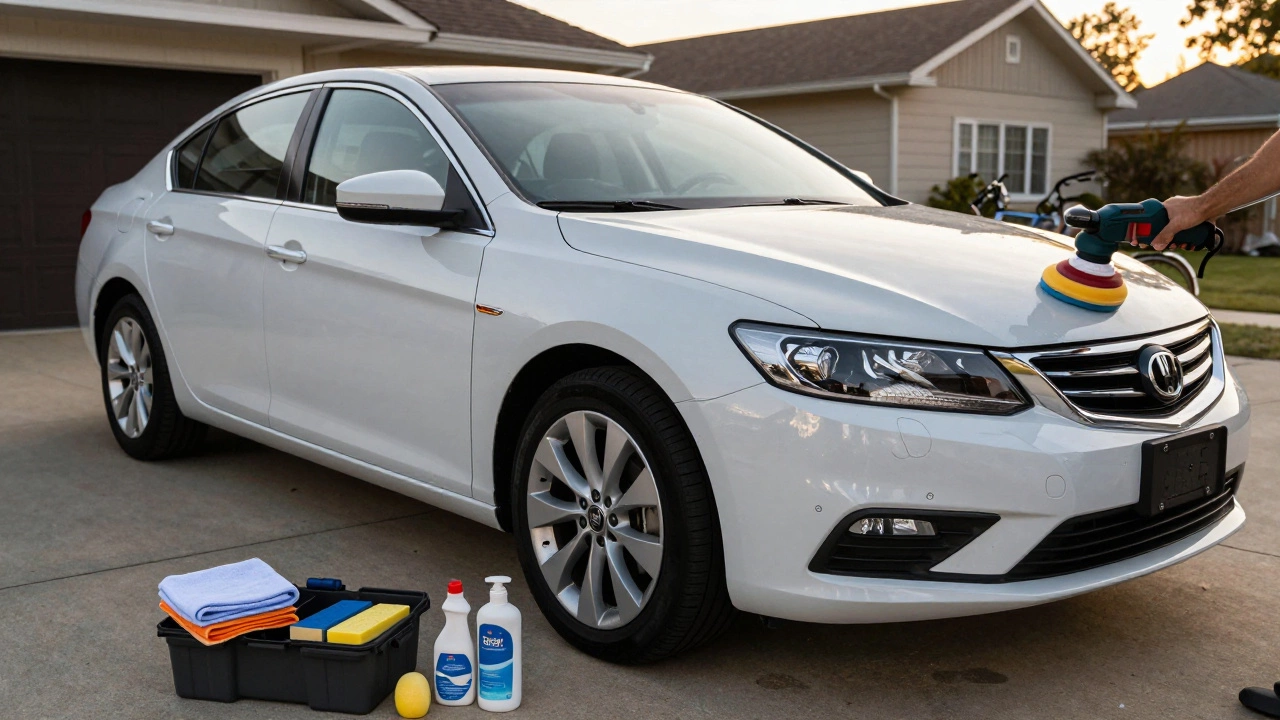
Most people think DIY detailing means buying a few sponges and some spray wax. That’s not enough. A proper DIY setup needs real tools. Here’s what a basic but effective kit costs upfront:
- Two microfiber towels (50 count pack) - $25
- Quality car wash soap (1 gallon) - $20
- Clay bar and lubricant - $30
- Dual-action polisher (entry-level, like the Porter-Cable 7424XP) - $150
- Two polishing pads (cutting and finishing) - $25
- Paint sealant or ceramic coating (16 oz) - $50
- Interior cleaner and protectant - $15
- Wheel cleaner and brush set - $20
- Vacuum with upholstery attachment - $60 (if you don’t already own one)
Total upfront cost: around $400. That’s a lot-until you realize this kit lasts for 15-20 full details on an average sedan. That’s $20-$27 per detail. If you detail your car twice a year, you’re spending under $50 annually on supplies.
Compare that to a professional detail. Even a basic exterior wash and wax runs $80-$120. A full interior and exterior detail? $200-$400. Do that twice a year? That’s $400-$800. In less than two years, you’ve paid for your entire DIY kit-and saved hundreds.
What You’re Really Paying For
When you pay a pro, you’re not just paying for the products. You’re paying for time, experience, and consistency. A professional detailer knows how to remove swirls without burning the paint. They know which cleaners won’t damage leather or plastic. They use industrial-grade equipment you can’t buy at Home Depot.
But here’s the thing: most cars don’t need that level of expertise. Unless your paint is covered in deep scratches or your interior smells like a gym sock, you can handle 90% of the work yourself. The biggest mistakes people make when detailing at home? Using household cleaners, skipping the clay bar, and rushing the drying process.
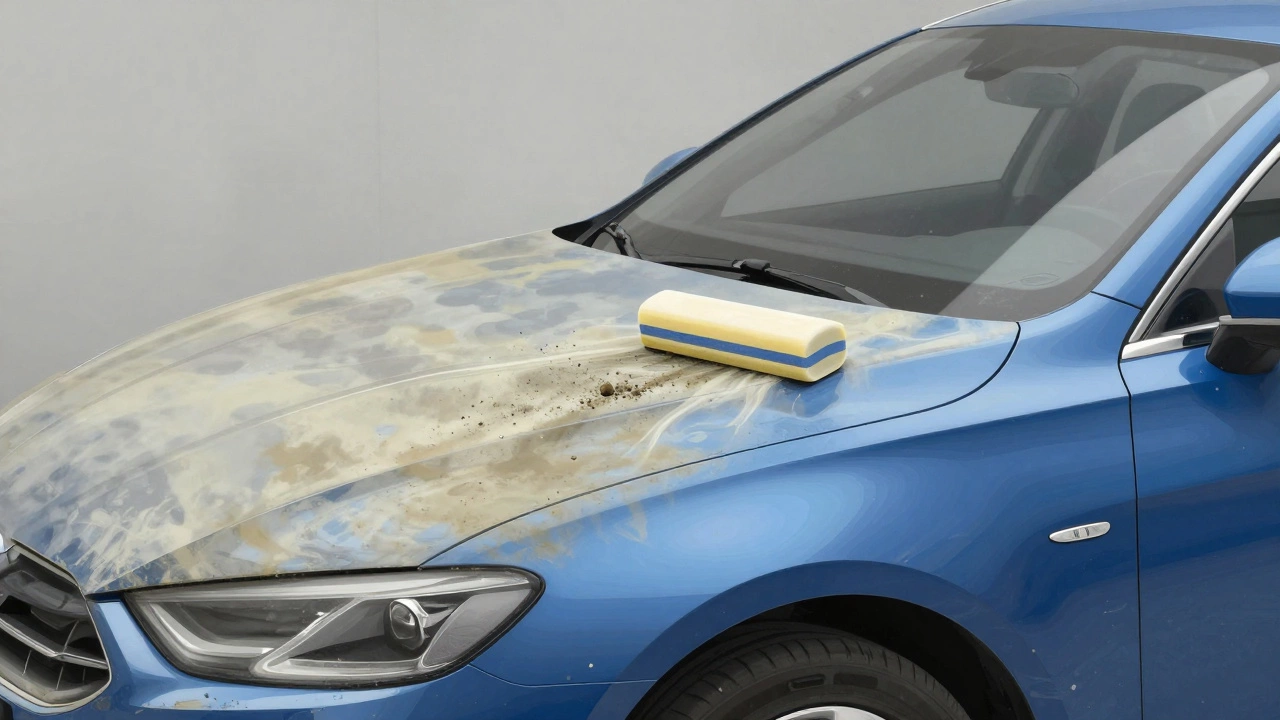
Household glass cleaner? It strips wax and leaves streaks. Dish soap? It’s too harsh-it removes protective layers and dries out rubber. A clay bar? It’s not optional. It pulls embedded contaminants like tree sap residue, brake dust, and industrial fallout that washing alone won’t touch. Skip it, and your sealant won’t stick.
Time Investment: Is It Worth It?
Let’s be honest: DIY detailing takes time. A full detail on a midsize car takes 4-6 hours. That’s a Saturday afternoon gone. But here’s the trade-off: you control the quality. You can take your time. You can focus on the areas that matter most-like the driver’s side door handles, which get touched every day and show wear fast. You can clean the vents, the cup holders, the seat crevices-things pros often skip to save time.
Think of it like cooking. You can order takeout every night, or you can spend two hours making a meal that’s healthier, tastier, and costs less. Same principle. The time isn’t wasted-it’s an investment in ownership.
And if you’re short on time? Start small. Do a quick wash and seal every two weeks. Do a full interior clean once a quarter. You don’t need to do everything at once. Consistency beats perfection.

When DIY Goes Wrong
Yes, you can mess up. Badly.
One common mistake: using a cheap polisher without knowing how to control the pressure. Too much speed, too much pressure, and you’ll burn through the clear coat. You can’t fix that. It’s permanent. That’s why beginners should stick to dual-action polishers-they’re forgiving. Orbital motion, no spinning. You can’t accidentally sand your paint off.
Another issue: using the wrong towel. A cheap, low-pile towel can scratch paint. Always use high-quality microfiber with a GSM rating of 300 or higher. And never reuse a towel without washing it. Dirt trapped in the fibers turns into sandpaper.
And don’t skip the drying step. Air drying leaves water spots. Towel drying with a dirty towel leaves streaks. Use one towel for drying, another for buffing. Keep them separate. Wash them after every use.
If you follow these rules, you won’t damage your car. You’ll improve it.
What You Save Beyond Money
Money’s not the only thing you gain. When you detail your own car, you notice things. A tiny chip on the fender. A crack in the dashboard. A loose vent panel. You start caring more. You fix small things before they become big problems.
You also stop treating your car like a rental. You stop letting mud dry on the wheels. You wash it after a rainstorm. You wipe down the console after a coffee spill. That’s not just cleaning-that’s maintenance. And maintenance extends life.
Studies show cars that are regularly detailed retain 15-20% more resale value over five years. That’s not marketing. That’s data from Kelley Blue Book. A well-maintained exterior and interior makes buyers trust the car’s history. They’re willing to pay more.
DIY vs. Pro: The Real Comparison
Let’s break it down side by side:
| Factor | DIY Detail | Professional Detail |
|---|---|---|
| Upfront Cost | $350-$500 (one-time) | $0 |
| Per-Session Cost | $20-$30 | $150-$400 |
| Time Required | 4-6 hours | 2-4 hours |
| Results Quality | Good to excellent (with practice) | Consistently excellent |
| Customization | Full control | Limited to packages |
| Long-Term Savings | $1,000+ over 3 years | N/A |
| Risk of Damage | Low (if done right) | Negligible |
The table doesn’t lie. If you detail your car twice a year for three years, you’ll spend around $180 DIY versus $900-$2,400 professionally. That’s an 80%+ savings. And you’re not just saving money-you’re learning a skill that lasts.
Where to Start (Simple 5-Step Plan)
Don’t get overwhelmed. Start here:
- Wash the car with a dedicated car soap. Use two buckets-one for soap, one for rinsing. This prevents dirt from scratching the paint.
- Clay the surface. Spray lubricant, glide the clay bar over the paint. You’ll feel grit-that’s the junk you’ve been missing.
- Dry with a clean, plush microfiber towel. Don’t skip this.
- Apply sealant or ceramic coating. Use a foam applicator. Let it haze, then buff off with a clean towel.
- Clean the interior: vacuum, wipe down plastics, condition leather. Use a brush for vents.
Do this every six months. You’ll be amazed at how much better your car looks-and how much less you’ll want to pay someone else to do it.
Final Thought: It’s Not About Saving Money-It’s About Taking Pride
People who detail their own cars don’t do it just to save cash. They do it because they care. They take pride in their ride. They notice the difference between a car that’s been washed and one that’s been looked after.
You don’t need to be an expert. You don’t need the most expensive kit. You just need to start. And keep going.
That’s the real savings-not in dollars, but in satisfaction.
Is it cheaper to detail a car yourself than to pay for a professional?
Yes, it’s almost always cheaper in the long run. A one-time investment of $350-$500 for a basic kit pays for itself after 2-3 professional details. After that, each DIY session costs under $30 in supplies, while a pro detail runs $150-$400.
What’s the most important tool for DIY car detailing?
The dual-action polisher. It’s the only tool that can safely remove swirls and light scratches without damaging the paint. You can wash and wax by hand, but removing defects requires machine power. A good entry-level model like the Porter-Cable 7424XP costs around $150 and lasts years.
Can I use household cleaners like Windex or dish soap?
No. Household cleaners are too harsh. Windex strips wax and leaves streaks on glass and paint. Dish soap removes protective coatings and dries out rubber and plastic. Always use products made specifically for cars. They’re pH-balanced and safe for automotive surfaces.
How often should I detail my car myself?
Wash your car every two weeks. Do a full detail-clay, polish, sealant-every 6 months. If you live in a harsh climate (salt, sand, pollution), do it every 4 months. Interior cleaning can be done quarterly unless you have kids or pets.
Do I need a ceramic coating for DIY detailing?
Not necessarily. A paint sealant lasts 6-12 months and is much easier to apply. Ceramic coatings last longer (2-5 years) but require perfect conditions and prep work. For beginners, start with sealant. Upgrade to ceramic later if you enjoy the process.
Can I damage my car’s paint doing it myself?
Yes-if you use the wrong tools or techniques. Using a rotary buffer, cheap towels, or skipping the clay bar can cause swirls or scratches. But with a dual-action polisher, quality microfiber, and proper steps, the risk is very low. Most damage happens from rushing or cutting corners.