K&N Air Filter Maintenance Checklist
Follow these steps in order. Remember: Only oil the dirty side! Oiling both sides can damage your MAF sensor.
Step 1: Remove & Inspect
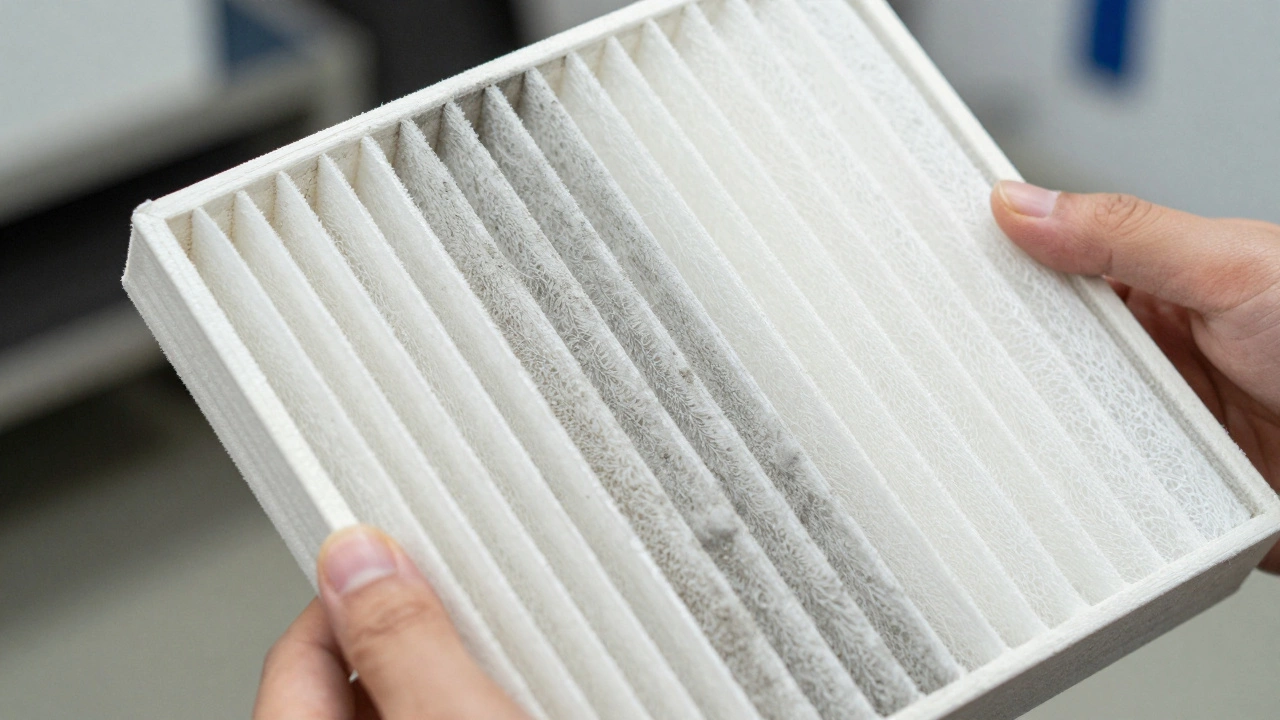
Remove the filter from the intake housing. Check the cotton gauze for any rips, tears, or holes.
Quick Summary: The Golden Rules of Oiling
- Do NOT spray both sides. Only oil the "dirty" side (the side facing the air intake).
- Avoid over-oiling. Too much oil can foul your Mass Air Flow (MAF) sensor.
- Let it soak. Give the oil time to saturate the fibers before installing.
- Use the right tools. Always use a dedicated K&N Recharger Kit.
The Short Answer: Which Side Gets the Oil?
To be crystal clear: you only apply oil to the side of the filter that faces the incoming air. If you're looking at the filter, this is the side that looks dirty or grey before you clean it. You should never oil the "clean" side-the side that faces the engine intake.
Why? Because the oil is designed to act as a sticky trap for dust and debris. If you apply oil to both sides, you're essentially creating a thick, gummy layer that restricts airflow. More importantly, excess oil on the clean side can be sucked directly into your engine. In modern cars, this is a recipe for disaster because that oil will coat your Mass Air Flow (MAF) Sensor, which is a precision electronic component that measures air density. When a MAF sensor gets oily, it sends wrong data to the ECU, leading to rough idling, poor fuel economy, and a dreaded "Check Engine" light.
Understanding the Oiling Process
To do this right, you need to understand that the Cotton Gauze medium is porous. The oil fills the gaps between the cotton fibers. When air rushes through, the oil captures the particles. If you oil both sides, you aren't adding more filtration; you're just adding more restriction and a higher risk of sensor failure.
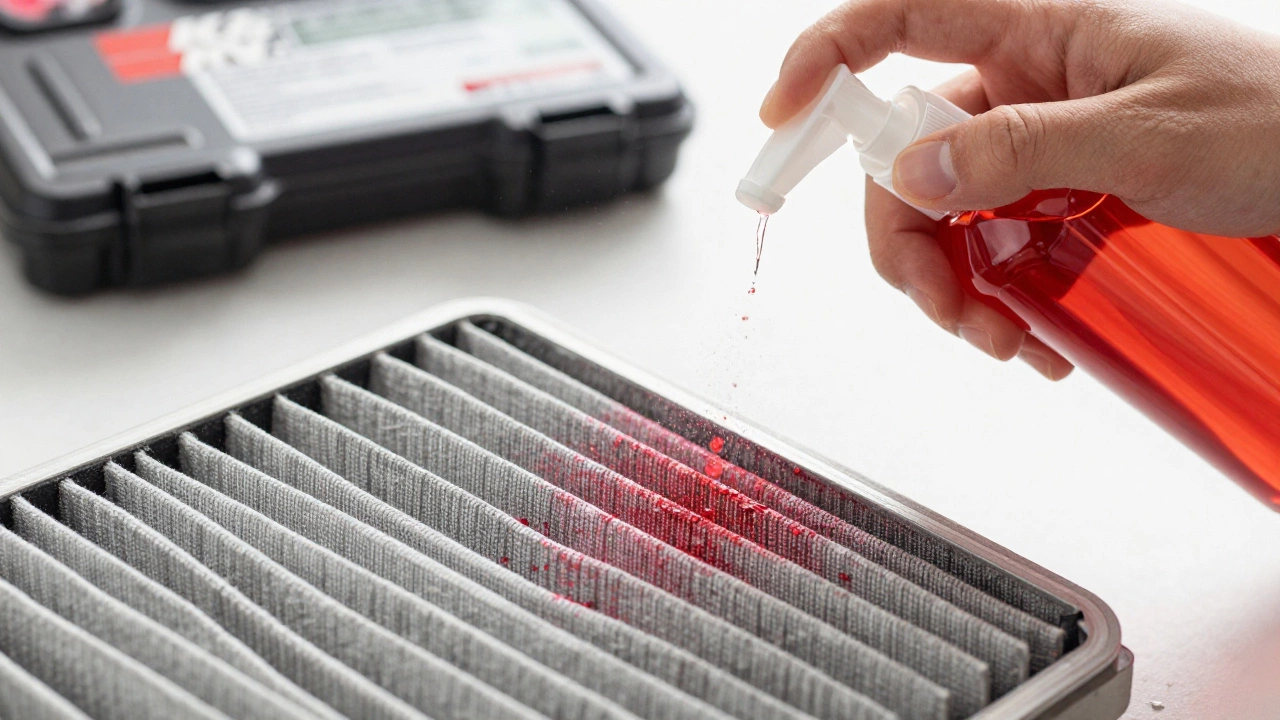
If you're using a spray bottle, the temptation is to just coat everything. Resist that urge. Hold the bottle about 6 to 10 inches away and apply a steady, even coat to the dirty side only. You want the fabric to look saturated but not dripping. If you see "puddles" of oil forming in the folds of the filter, you've gone too far. Use a clean, lint-free cloth to gently dab away the excess.
| Action | The Right Way (Pro) | The Wrong Way (Amateur) | Result of Wrong Way |
|---|---|---|---|
| Oiling Side | Dirty side only | Both sides | Restricted airflow / MAF fouling |
| Amount | Even, light coat | Saturated/Dripping | Oil ingestion into engine |
| Drying Time | Wait 20-30 minutes | Immediate install | Oil splashes onto sensors |
The Step-by-Step Cleaning and Oiling Workflow
You can't just throw oil on a dirty filter. You have to start with a clean slate. Here is the professional workflow for maintaining a K&N filter oiling routine:
- Remove and Inspect: Take the filter out and check for any rips or holes. If the cotton is torn, no amount of oil will fix it; you need a new filter.
- Pre-Wash: Spray the dirty side with K&N Power Kleen cleaner. Let it soak for about 10 minutes. Do not let the cleaner dry on the filter.
- Rinse: Rinse the filter from the clean side to the dirty side. This pushes the dirt out the way it came in. Never spray water or air from the dirty side, as this pushes particles deeper into the fabric.
- Dry: This is where most people mess up. Let the filter air dry naturally. Using a heat gun or a compressed air nozzle can tear the delicate cotton fibers.
- Oil: Apply the oil to the dirty side only. Use a light, even coat.
- Wait: Let the oil soak into the fibers for at least 20 minutes. This ensures the oil is locked into the gauze and won't fly off onto your sensors the moment you start the car.
Common Pitfalls and How to Fix Them
What happens if you've already oiled both sides? Don't panic, but don't start the engine yet. If you've over-oiled or oiled the wrong side, the best move is to clean the filter again. Use the cleaner to strip the excess oil, rinse thoroughly, and start the process over. It's a bit of a pain, but it's much cheaper than replacing a MAF sensor.
Another common mistake is using "generic" oil. You must use the specific oil provided in the kit. These oils are formulated to have a specific viscosity that doesn't clog the pores of the cotton gauze. Using motor oil or other lubricants can ruin the filtration properties of the element.
When Should You Actually Re-Oil?
You don't need to oil your filter every time you drive, but you shouldn't ignore it either. A good rule of thumb is to check your filter every 5,000 to 10,000 miles. If you drive in dusty environments-like gravel roads or construction zones-you'll need to do this more often.
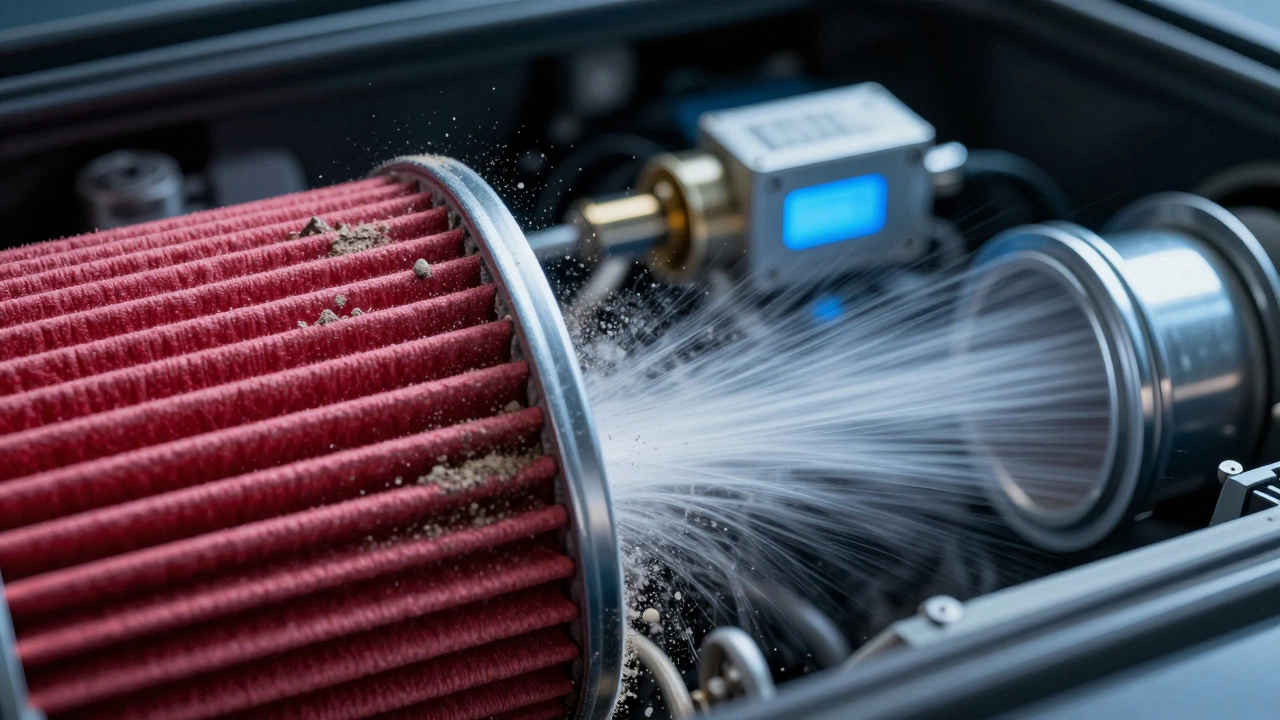
If the filter looks grey or brown, it's time for a wash and oil. If it's still a bright, vibrant red, you're good to go. However, keep in mind that the oil eventually evaporates or gets trapped by dirt. If the red color has faded significantly, even if it doesn't look "dirty," a light re-oiling may be necessary to maintain the filtration efficiency.
Impact on Engine Performance
A properly oiled filter provides a balance between high air volume and particle protection. When the oil is correct, your engine breathes easier, which can lead to a slight bump in horsepower and better throttle response. However, the main benefit is longevity. A washable filter prevents you from throwing away ten paper filters over the course of a decade.
If you notice your car is idling roughly after a filter service, check your MAF sensor. You can often clean it using a dedicated MAF Sensor Cleaner (a quick-drying electronic spray). This removes the oil film and restores the sensor's ability to read air accurately.
Can I use a dry K&N filter?
No. The cotton gauze in a K&N filter is too open to stop small particles on its own. The oil is what actually does the filtering. Running it dry will allow dust and grit into your engine, which can cause premature wear on cylinder walls and pistons.
What happens if I accidentally oil the clean side?
The oil can get sucked into the intake and coat your Mass Air Flow (MAF) sensor. This usually results in a "Check Engine" light, poor fuel economy, and erratic idling. If this happens, clean the filter and the sensor before driving further.
How do I know if I've used too much oil?
If the filter looks "dripping" wet or if you see pools of oil collecting in the pleats, you've over-applied. The filter should look evenly saturated and red, but it shouldn't be leaking oil when you move it.
Do I need to oil the filter every time I wash it?
Yes. The cleaning process removes the old oil along with the dirt. Since the oil is the primary filtering agent, you must re-apply it after every wash to ensure your engine is protected.
Can I use a hairdryer to speed up the drying process?
It's risky. High heat can shrink or damage the cotton fibers, and high-pressure air can actually push holes through the gauze. It's best to let the filter air dry naturally for a few hours.
Next Steps for Maintenance
Now that you know the "one-side only" rule, the best thing you can do is keep a maintenance log. Note the mileage when you last cleaned and oiled your filter. If you've noticed a drop in fuel efficiency or a sluggish feel to the acceleration, check the filter-it might be clogged or over-oiled.
For those who want to avoid the mess entirely, you might look into "dry" high-flow filters, though they typically don't offer the same level of microscopic filtration as an oiled cotton system. Stick to the kit, follow the one-side rule, and your engine will breathe perfectly for years.