Alloy Wheel Upgrade Calculator
Vehicle Parameters
Total Unsprung Mass Reduction
Lighter wheels allow suspension to react faster.
Performance Impact Estimate
Estimated Annual Fuel Savings
Based on a conservative 1-3% efficiency gain from reduced rotational inertia.
Enter your vehicle details above
Click "Calculate Benefits" to see how much you could save and improve performance.
Look down at your car. What do you see? If you’re driving anything newer than a ten-year-old economy sedan, you’re probably looking at shiny, multi-spoked discs that look nothing like the heavy, rusty buckets of old. These are alloy wheels. They’ve become so standard that it’s hard to remember when cars didn’t come with them from the factory. But why did the automotive industry make such a massive shift away from traditional steel wheels? Is it just about making your car look cool in a parking lot, or is there actual engineering magic happening under those spokes?
The truth is, alloy wheels aren’t just cosmetic upgrades. They change how your car handles, how fast it accelerates, and even how much gas you burn. Understanding what makes them special helps you decide if they’re worth the investment for your daily driver or your weekend project.
The Weight Game: Why Lighter Matters More Than You Think
The biggest advantage of an alloy wheel over a steel one is simple physics: weight. Steel is dense. It’s strong, yes, but it’s also heavy. An average steel wheel can weigh anywhere from 15 to 20 kilograms (33-44 lbs). A comparable alloy wheel might weigh only 8 to 12 kilograms (17-26 lbs). That difference sounds small until you realize that weight located at the very bottom of your car, spinning around, has a disproportionate effect on performance.
This concept is known as unsprung mass is the weight of components not supported by the suspension, including wheels, tires, brakes, and half the axle weight. When this mass is lower, your suspension can react faster to bumps and dips in the road. Imagine running while wearing heavy boots versus running in lightweight sneakers. The sneakers allow your legs to move up and down more quickly. Similarly, lighter wheels allow your shocks and struts to keep the tire planted on the road surface better. This results in sharper cornering, better braking distances, and a smoother ride over rough pavement.
Furthermore, because the engine doesn't have to work as hard to rotate lighter wheels, you’ll notice improved acceleration. It’s not just about top speed; it’s about responsiveness. When you tap the gas pedal, a car with low unsprung mass feels eager and alive, whereas a car with heavy steel wheels often feels sluggish.
Heat Management: Keeping Brakes Cool Under Pressure
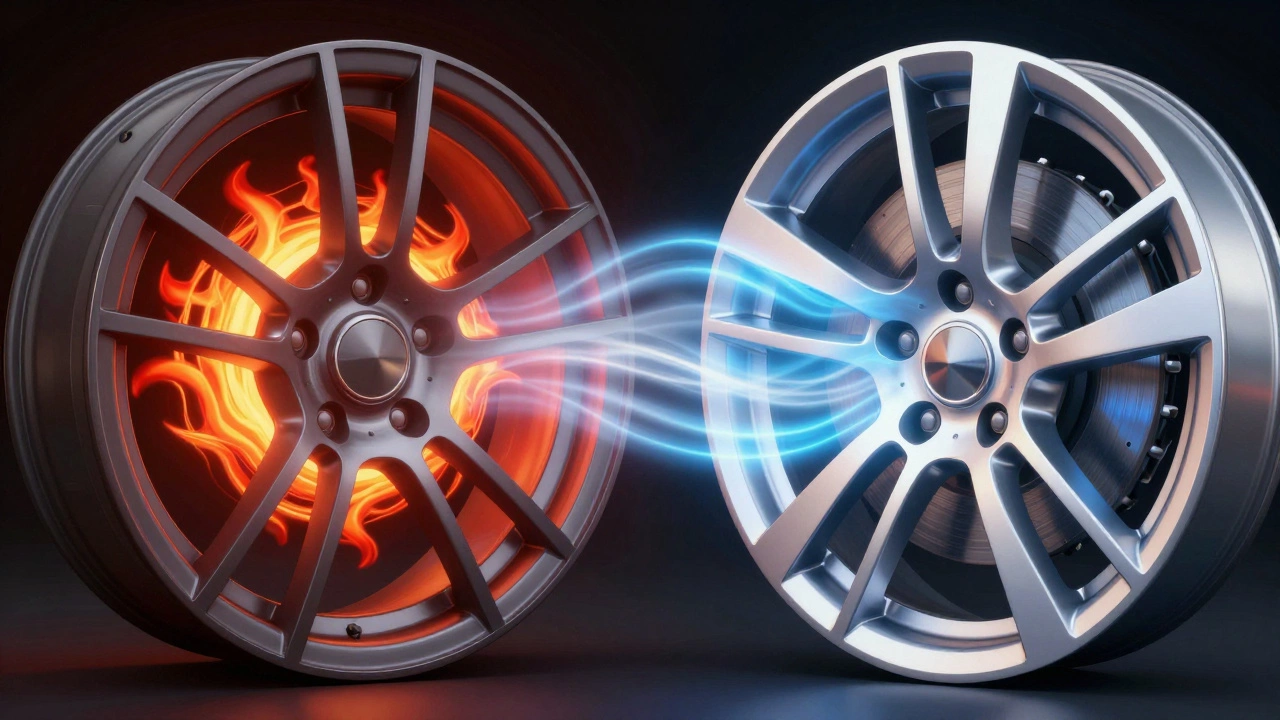
Another critical factor is heat dissipation. Every time you brake, kinetic energy turns into heat. If that heat stays trapped near the brake pads and rotors, your braking performance drops-a phenomenon called brake fade. Steel wheels act like insulators. They trap heat inside the hub area. Alloy wheels, particularly those made from aluminum alloys, conduct heat away from the brakes much more efficiently.
This thermal management is crucial for safety, especially if you drive in hilly areas or tow heavy loads. By allowing hot air to escape through the spokes and conducting heat through the rim material, alloy wheels help maintain consistent braking power. While modern ceramic brakes have changed the game somewhat, the passive cooling benefit of alloys remains a significant engineering advantage for everyday street driving.
Precision Engineering: The Fit and Finish Difference
Steel wheels are typically stamped out of sheets of metal, then welded together. This process is cheap and fast, but it lacks precision. The result is often a wheel that isn’t perfectly balanced or true. Alloy wheels are cast, forged, or flow-formed using high-pressure molds. This manufacturing process allows for tolerances measured in fractions of a millimeter.
Why does precision matter? Because it reduces vibration. Have you ever driven on a highway and felt a slight shimmy in the steering wheel at 100 km/h? That’s often caused by an out-of-balance wheel. The tighter manufacturing tolerances of alloy wheels mean they come off the assembly line closer to perfect balance. This translates to a quieter cabin and less wear on your suspension components over time.
| Feature | Steel Wheels | Alloy Wheels |
|---|---|---|
| Weight | Heavy (High Unsprung Mass) | Light (Low Unsprung Mass) |
| Heat Dissipation | Poor (Traps Heat) | Excellent (Conducts Heat Away) |
| Durability | Bends, rarely cracks | Cracks, rarely bends |
| Aesthetics | Basic, requires hubcaps | Sleek, design variety |
| Cost | Inexpensive | Moderate to High |
| Repairability | Easier to straighten | Harder to repair if cracked |
The Durability Debate: Bending vs. Cracking
Here’s where things get tricky. People often assume that because alloy wheels look fancy, they must be fragile. In reality, it’s a trade-off between ductility and brittleness. Steel is ductile; it bends under impact. Aluminum alloys are stronger but more brittle; they tend to crack under severe stress rather than bend.
If you hit a large pothole at speed, a steel wheel will likely dent inward. You can usually take it to a shop, heat it up, and hammer it back into shape. An alloy wheel, however, might develop a hairline crack. Once an alloy wheel cracks, it’s generally unsafe to repair and must be replaced. This is the main downside of alloys. They are less forgiving of abuse.
However, for normal driving conditions-city streets, highways, and occasional gravel roads-alloys are incredibly durable. Modern casting techniques, including low-pressure casting and forging, have made alloys strong enough to handle the rigors of daily use without failing. Forged wheels, in particular, offer strength comparable to steel but with significantly less weight, though they come at a premium price.
Fuel Efficiency: The Hidden Savings
You might not think about wheels when calculating your fuel budget, but they play a surprisingly large role. As mentioned earlier, reducing unsprung mass means the engine works less to accelerate the vehicle. Over the course of a year, this reduction in rotational inertia adds up. Studies have shown that switching from heavy steel wheels to lighter alloys can improve fuel economy by 1% to 3%. It doesn’t sound like much, but if you drive 20,000 kilometers a year, that could save you dozens of liters of fuel.
Additionally, many alloy wheels are designed with aerodynamic features. The spokes are shaped to reduce air turbulence behind the wheel, which lowers drag. Lower drag means less wind resistance, which further contributes to better mileage. Manufacturers are increasingly designing wheels specifically for electric vehicles (EVs) to maximize range, proving that wheel design is now a key component of overall vehicle efficiency.
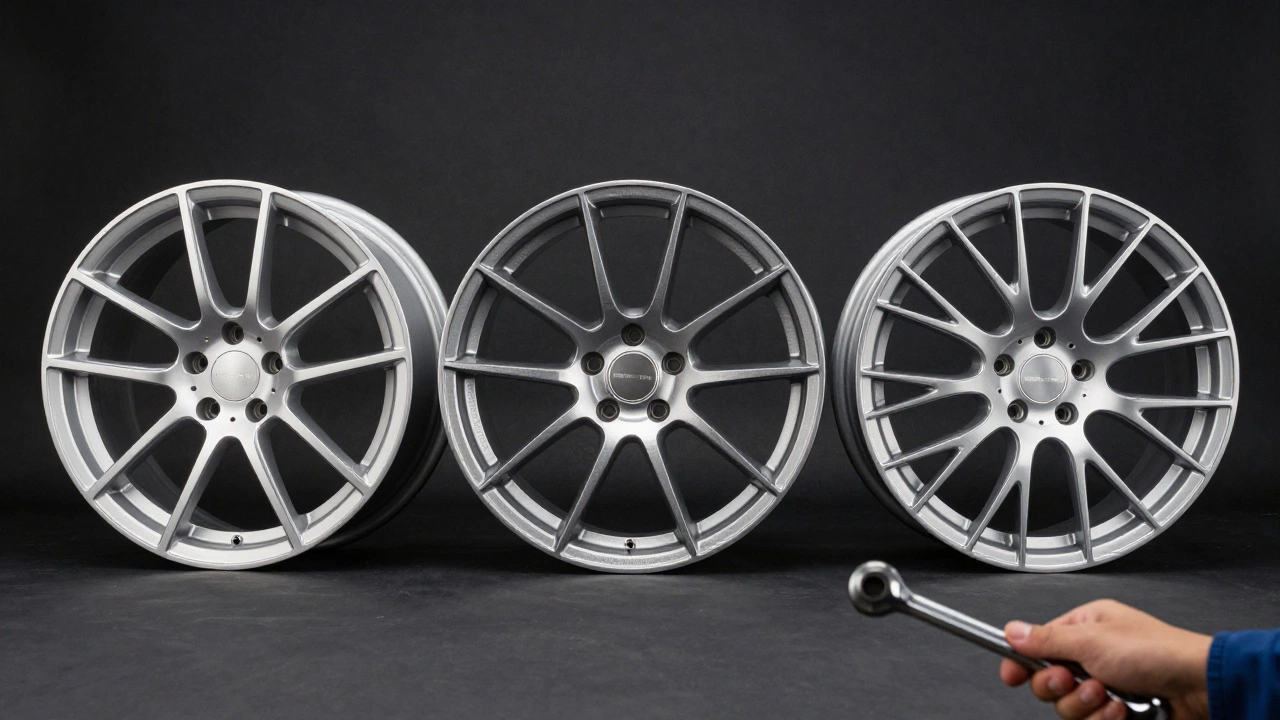
Aesthetics: The First Impression
Let’s be honest: looks matter. Wheels are the jewelry of the car. They frame the brakes, fill the arches, and define the stance of the vehicle. Steel wheels require plastic hubcaps to hide their industrial appearance. Alloy wheels, on the other hand, are finished directly. Whether it’s a polished lip, a matte black powder coat, or a complex multi-spoke design, alloys offer endless customization options.
The visual impact is immediate. A set of well-chosen alloy wheels can transform a bland commuter car into something that looks sporty and intentional. Conversely, poorly chosen wheels can ruin the proportions of a beautiful vehicle. Getting the offset, width, and diameter right is crucial. Too wide, and they stick out awkwardly; too narrow, and they look lost in the wheel well. This is where consulting with experts or using online fitment guides becomes essential.
Choosing the Right Alloy: Cast vs. Forged
Not all alloy wheels are created equal. Understanding the manufacturing process helps you choose the right type for your needs.
- Cast Wheels: Molten aluminum is poured into a mold. This is the most common and affordable method. They are good for daily drivers but heavier than forged options.
- Flow-Formed Wheels: A hybrid process where a cast barrel is spun and stretched to create a thinner, stronger profile. They offer a great balance of price, weight, and strength.
- Forged Wheels: A solid block of aluminum is pressed into shape under extreme pressure. This aligns the metal grain structure, resulting in the strongest and lightest wheels available. They are expensive but ideal for high-performance applications.
For most people, a quality cast or flow-formed wheel provides the best value. You get the aesthetic benefits, the weight reduction, and the durability needed for everyday life without breaking the bank. Forged wheels are reserved for track enthusiasts or those who want the absolute best performance regardless of cost.
Maintenance Tips for Longevity
To keep your alloy wheels looking new and performing well, regular maintenance is key. Brake dust is acidic and can etch into the clear coat of your wheels if left unchecked. Use a dedicated wheel cleaner once a month, or more often if you drive in dusty conditions. Avoid using harsh household cleaners that can strip the protective coating.
Also, inspect your wheels regularly for curb rash or cracks. Small chips in the paint can lead to corrosion over time, especially in places like Brisbane where salt spray from the coast is common. Touch up any scratches immediately to prevent rust from setting in. Finally, ensure your wheels are properly torqued after installation. Overtightening lug nuts can warp the wheel or damage the studs, leading to expensive repairs.
Are alloy wheels safer than steel wheels?
Yes, in terms of handling and braking. Because alloy wheels are lighter, they reduce unsprung mass, allowing the suspension to keep the tires in better contact with the road. This improves grip during cornering and shortens braking distances. However, steel wheels are more resistant to cracking from severe impacts, which can be a safety factor in extreme off-road scenarios.
Can I put alloy wheels on my truck or SUV?
Absolutely. Many trucks and SUVs come with alloy wheels from the factory. Just ensure the load rating of the wheels matches or exceeds the requirements of your vehicle. Heavy-duty trucks may need specific reinforced alloys or steel wheels to handle towing capacities safely.
How much do alloy wheels cost compared to steel?
A set of four basic steel wheels might cost $200-$400, while a comparable set of aftermarket alloy wheels can range from $800 to $2,000 or more. Forged wheels can easily exceed $3,000 for a set. The price depends on brand, manufacturing process, and design complexity.
Do alloy wheels affect ride comfort?
Generally, yes, but positively. Because they are lighter, they allow the suspension to absorb bumps more effectively. However, some stiff, performance-oriented alloy designs can transmit more road noise. Choosing a wheel with a flexible spoke design can help mitigate this.
Is it worth upgrading from steel to alloy wheels?
For most drivers, yes. The combination of improved aesthetics, better handling, increased fuel efficiency, and enhanced braking performance makes the upgrade worthwhile. Unless you are on a strict budget or frequently drive on unpaved, rocky terrain where steel’s durability is paramount, alloys offer a superior driving experience.