Car Interior Detailing Guide
Select a surface below to see recommended products, tools, and techniques.
Plastic/Vinyl
Leather
Fabric
Glass
Screens
Ready to Detail?
Click on any surface type above to get specific instructions, recommended products, and tools.
Ever opened your car door and been hit by that stale, dusty smell? You know the one. It’s not just gross; it makes you look like you don’t care about your ride. But here is the hard truth: there is no single "best" product for detailing the inside of a car. If someone tells you there is, they are trying to sell you a bottle of magic potion that doesn’t exist.
The real answer depends entirely on what surface you are touching. Using a heavy wax on your touchscreen will ruin it. Spraying water directly into your vents will grow mold. The secret isn't buying the most expensive spray; it's matching the right tool to the specific material in your cabin. Whether you have cheap plastic trim, genuine leather seats, or delicate fabric carpets, using the wrong chemical can cause permanent damage faster than dirt ever could.
The Golden Rule: Less Is More
Before we talk about brands or bottles, let's talk about technique. Most people mess up their interiors because they use too much product. In Brisbane, where the humidity hits hard, excess moisture trapped in upholstery is a recipe for mildew. You want to clean, not soak.
The best approach starts with removal, not application. Grab a shop vac or a high-quality handheld vacuum. Get all the crumbs, sand, and dead leaves out first. If you wipe over dust, you are just making mud. Once the loose debris is gone, you can start applying cleaners. Always work in small sections-maybe one seat or half the dashboard at a time. This keeps you from letting products dry on surfaces, which leaves those annoying streaks everyone hates.
Plastic and Vinyl: The Dashboard and Trim
Your dashboard, door panels, and center console are usually made of hard plastics or vinyl. These surfaces attract static dust like magnets. The goal here is to clean without leaving a greasy residue that attracts even more dirt later.
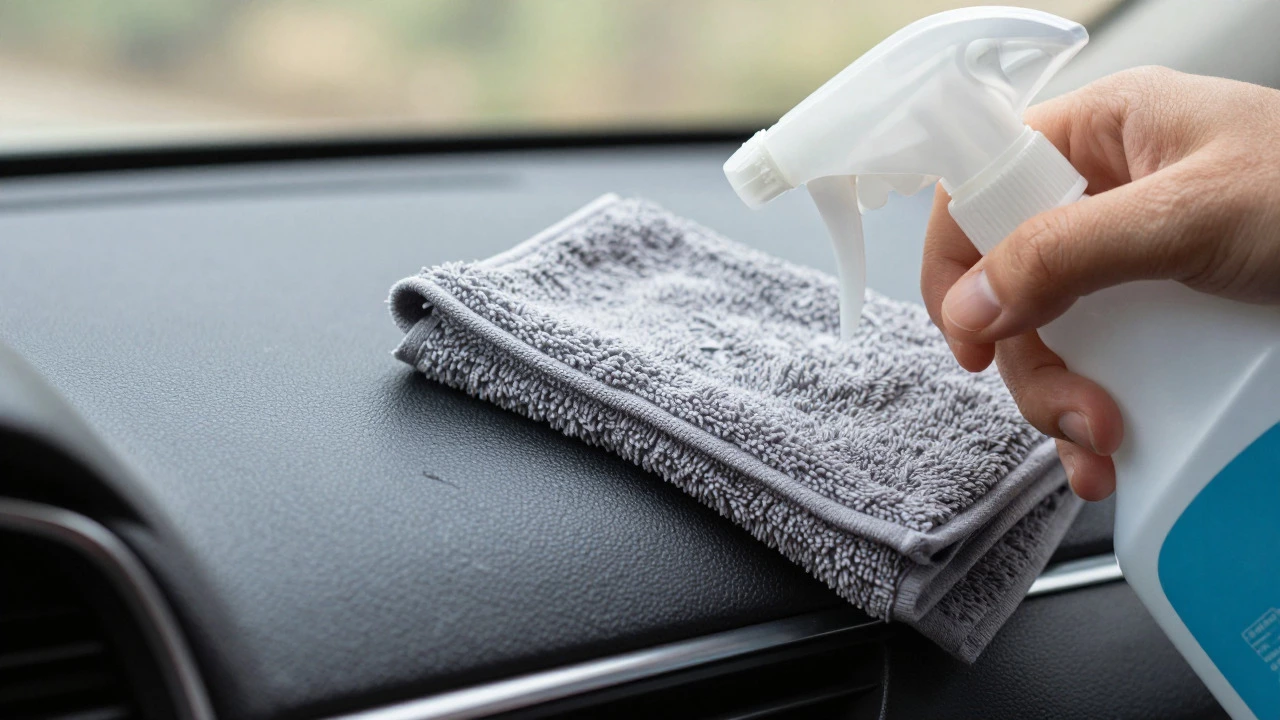
Avoid old-school silicone sprays. They give that shiny, wet look for an hour, but then they turn orange under UV light and become sticky. Instead, look for APC (All-Purpose Cleaner) diluted heavily with water. A 10:1 ratio (ten parts water to one part cleaner) is usually safe for most hard plastics. Spray it onto a microfiber towel, never directly onto the dash. Wipe gently. If you see grime building up in the vents, use a soft-bristled brush-an old toothbrush works perfectly-to loosen it before wiping.
If you want some protection against the sun, use a water-based UV protectant. These products contain polymers that bond to the plastic rather than sitting on top like oil. They prevent cracking and fading without the greasy feel. For matte finishes, ensure the product says "non-greasy" or "matte finish" specifically.
Leather Seats: Care vs. Cleaning
Leather is skin. Treat it like yours. Many people make the mistake of using household disinfectants or harsh soaps on leather seats. These strip the natural oils, causing the leather to dry out, crack, and peel. Once leather cracks, it is nearly impossible to fix professionally without re-dyeing the whole seat.
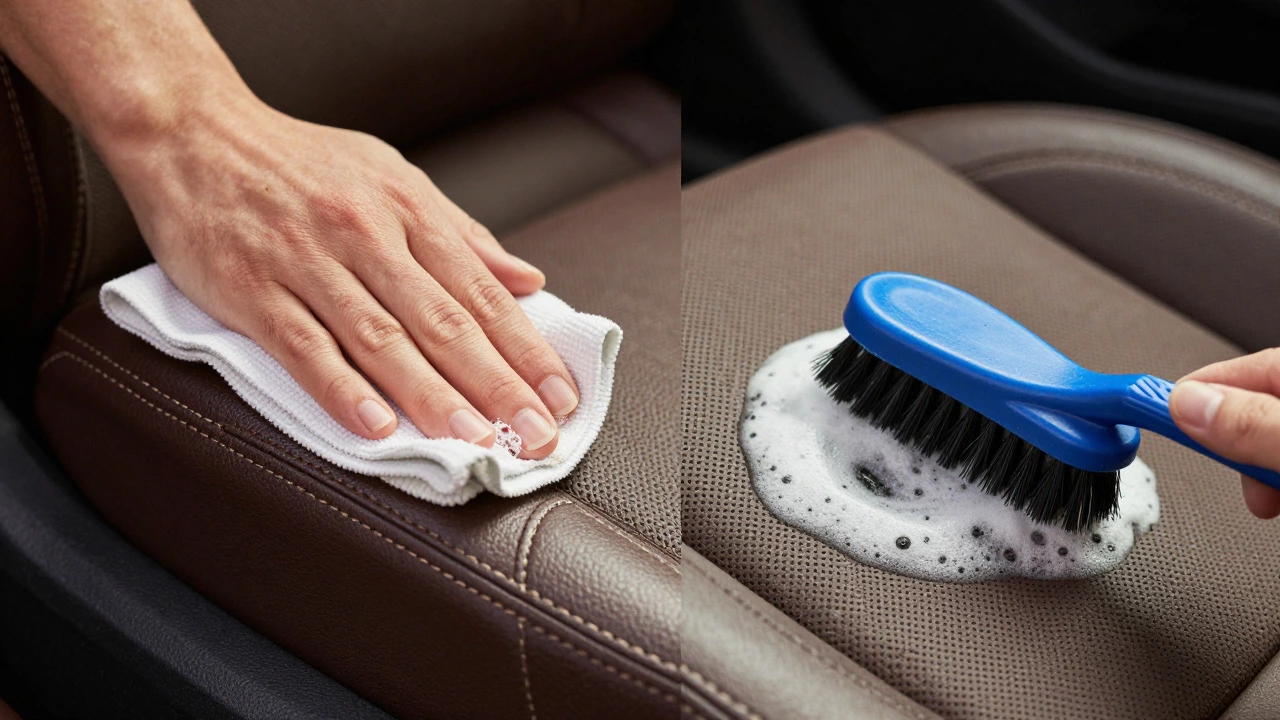
You need two things for leather: a pH-balanced leather cleaner and a conditioner. Start with the cleaner. Apply it to a microfiber cloth and wipe the seats in circular motions. Pay attention to the seams and creases where body oils and sweat accumulate. Rinse with a damp cloth if the cleaner requires it (check the label).
After the leather is clean and dry, apply a conditioner. Look for ingredients like lanolin or beeswax. These replenish the moisture lost during cleaning. Don't slather it on thick; a thin layer is enough. Let it absorb for 15 minutes, then buff off any excess with a clean dry towel. Do this every three to six months, depending on how often you drive and how hot it gets in your garage or driveway.
Fabric Upholstery and Carpets: The Deep Clean
Fabric holds smells and stains better than any other material. Vacuuming helps, but it doesn't remove ground-in dirt or coffee spills. For fabric seats and carpets, you generally have two options: dry foam cleaners or extractors.
Dry foam cleaners are great for quick maintenance. You spray the foam, agitate it with a brush, and wipe it away with a towel. It’s fast and dries quickly. However, for deep stains, you need extraction. An extractor sprays water mixed with detergent and sucks it back up simultaneously. Renting a carpet extractor from a local hardware store is cost-effective if you haven’t bought one yet. Use a dedicated automotive upholstery shampoo, not regular carpet cleaner, as auto shampoos are formulated to leave less residue that attracts dirt later.
Pro tip: When cleaning fabric, always test a hidden area first. Some lighter fabrics can discolor with strong detergents. Also, open your windows and run the AC on fan-only mode to help everything dry faster. Wet carpets in a humid climate like ours can develop musty odors within 24 hours if not dried properly.
Glass and Screens: Clarity Without Streaks
Windows and infotainment screens require different approaches. For side and rear windows, standard glass cleaner is fine, but avoid ammonia-based cleaners if you have tinted windows. Ammonia can break down the adhesive layers in window tint over time, causing bubbling. Use an ammonia-free glass cleaner and a waffle-weave microfiber towel. Wipe vertically, then horizontally, until clear.
For your touchscreen, forget the spray bottle. Liquid is the enemy of electronics. Use a pre-moistened screen wipe designed for electronics or a microfiber cloth slightly dampened with distilled water. Wipe gently. Avoid paper towels, which can scratch the oleophobic coating on modern screens. That coating repels fingerprints; once it’s scratched off, your screen will stay smudgy forever.
Odor Elimination: Beyond Air Fresheners
Masking bad smells with pine air fresheners is a temporary fix. To truly eliminate odors, you need to address the source. If your car smells like wet dog or old food, the bacteria are likely in the HVAC system or deep in the carpets.
Start by replacing your cabin air filter. It’s cheap and often overlooked. If the smell persists, use an ozone generator or an enzymatic odor eliminator. Ozone generators oxidize odor molecules, breaking them down chemically. Be careful: ozone is harmful to breathe, so run the generator only when the car is empty, then ventilate thoroughly before getting back in. Enzymatic cleaners eat the organic matter causing the smell (like urine or spilled milk). Spray it on the affected area, let it sit for several hours, then vacuum.
| Surface Type | Best Product | Tool to Use | Avoid |
|---|---|---|---|
| Hard Plastic/Vinyl | Diluted APC or Water-Based Protectant | Microfiber Towel | Silicone Sprays, Wax |
| Leather | pH-Balanced Leather Cleaner & Conditioner | Soft Microfiber Cloth | Household Soap, Bleach |
| Fabric/Carpets | Automotive Upholstery Shampoo | Brush & Extractor/Vacuum | Excess Water, Household Detergent |
| Glass | Ammonia-Free Glass Cleaner | Waffle-Weave Microfiber | Paper Towels, Ammonia (if tinted) |
| Touchscreen | Distilled Water or Screen Wipes | Dry Microfiber | Spray Bottles, Paper Towels |
Essential Tools You Actually Need
You don’t need a garage full of gadgets. Here is the minimal kit that gets professional results:
- Shop Vac: For removing loose debris from seats and carpets.
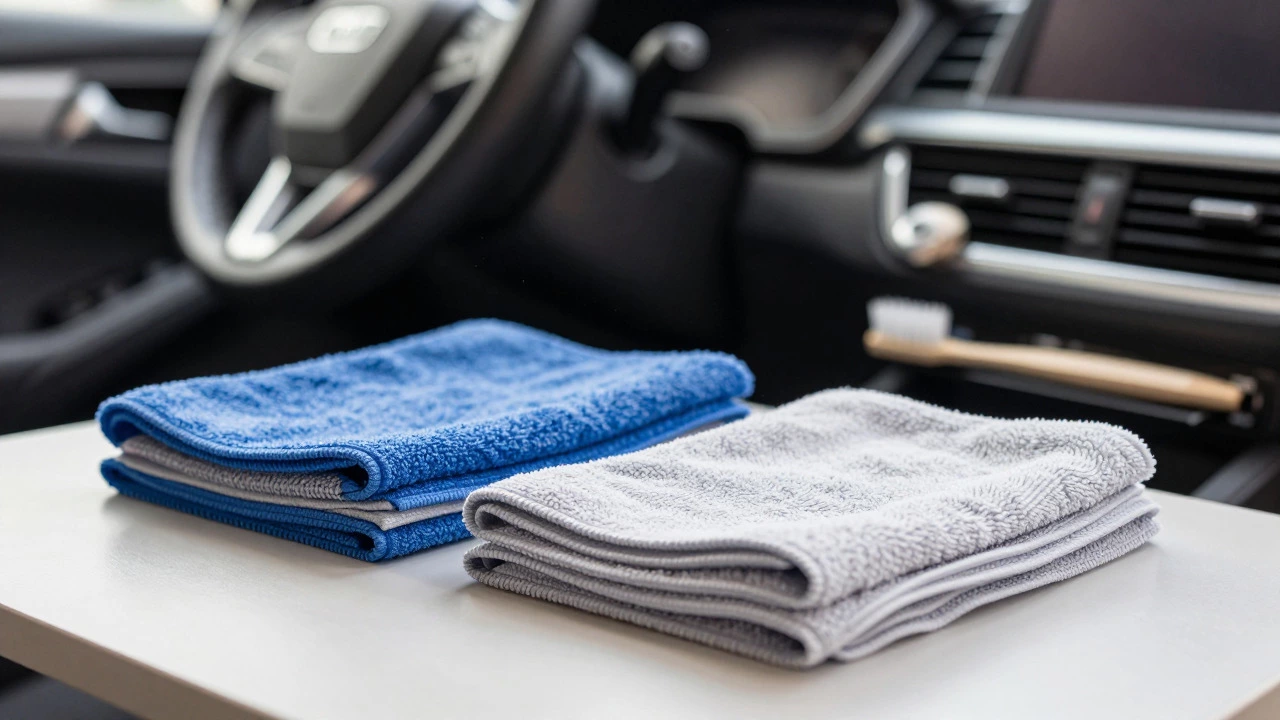
- Microfiber Towels: Buy a pack of 20-30. Use different colors for different areas (e.g., blue for glass, grey for plastic, white for leather) to avoid cross-contamination.
- Soft Bristle Brushes: One for vents, one for seats. Old toothbrushes work well for tight spots.
- Detailing Brush: A larger brush for agitating fabric seats.
- Bucket and Spray Bottle: For mixing your diluted cleaners.
Invest in quality microfiber. Cheap towels shed lint and scratch surfaces. Good microfiber has a high GSM (grams per square meter), meaning it’s thicker and more absorbent. You’ll spend less money in the long run because they last longer and clean better.
Maintaining Your Clean Interior
Detailing is not a one-time event. It’s a habit. The easiest way to keep your car clean is to prevent messes from happening. Install floor mats that cover the entire footwell, including the sides. Rubberized mats are easy to hose off outside your house. Keep a small trash bag in the trunk or door pocket so passengers don’t leave wrappers on the seats.
Wipe down high-touch areas like steering wheels and gear shifts weekly with a disinfectant wipe safe for cars. This prevents grease buildup from your hands. Vacuum the floors every two weeks. Doing these small tasks regularly means you won’t face a massive, overwhelming cleaning job every few months.
Can I use Windex on my car windows?
Only if your windows are not tinted. Standard Windex contains ammonia, which can degrade the adhesive in window tint film, causing it to bubble or peel over time. For tinted windows, always use an ammonia-free glass cleaner to be safe.
How often should I condition my leather seats?
Every 3 to 6 months is ideal. In hot climates like Brisbane, where UV exposure is high, leaning towards every 3 months helps prevent drying and cracking. Over-conditioning can make the leather slippery, so stick to a thin layer and buff off the excess.
Is vinegar good for cleaning car interiors?
Vinegar can be used for glass and hard plastics if diluted properly, but it is acidic and can damage leather if not rinsed thoroughly. It also leaves a strong smell that takes time to dissipate. Dedicated automotive cleaners are safer and more effective for most surfaces.
What is the best way to remove pet hair from car seats?
Rubber gloves are surprisingly effective. Put on a pair of rubber dishwashing gloves, dampen them slightly, and rub them over the fabric. The friction creates static that lifts the hair out of the fibers. You can then sweep the hair into piles and vacuum it up. Silicone brushes also work well for this purpose.
Should I use a steam cleaner on my car interior?
Steam cleaners are excellent for sanitizing and loosening grime without chemicals. However, you must be cautious with electronics and leather. High heat can damage sensitive components in the dashboard or cause leather to shrink. Use low-pressure settings and keep the nozzle moving to avoid saturating any single spot.